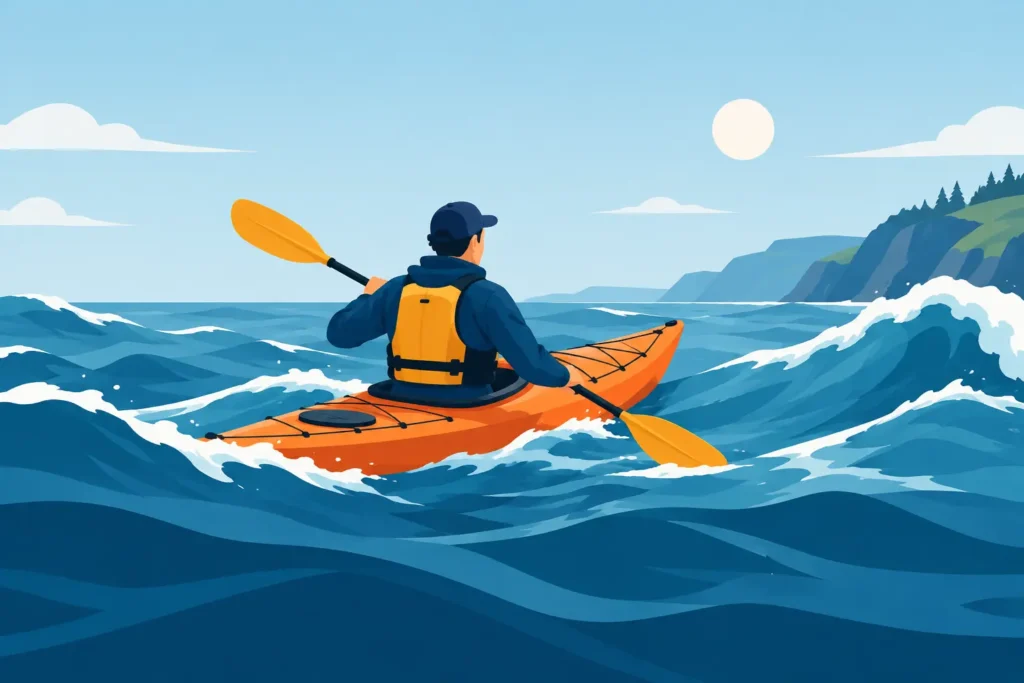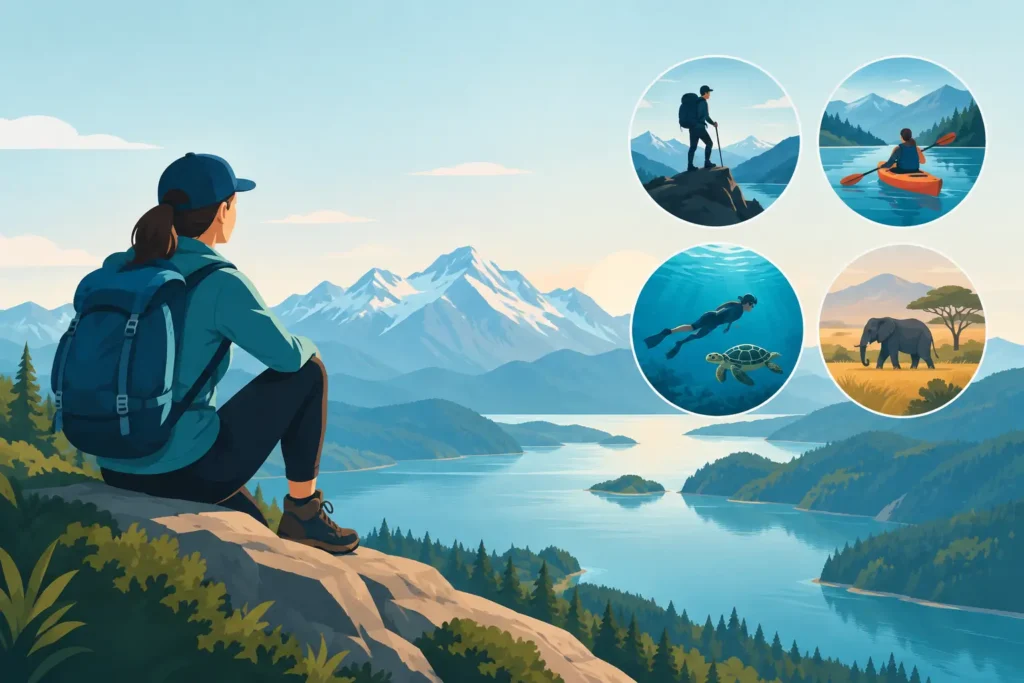

Rainforest Coastal Adventure Itineraries That Work
September 25, 2026
Remote Adventure Travel That Feels Wild, Not Risky
September 29, 2026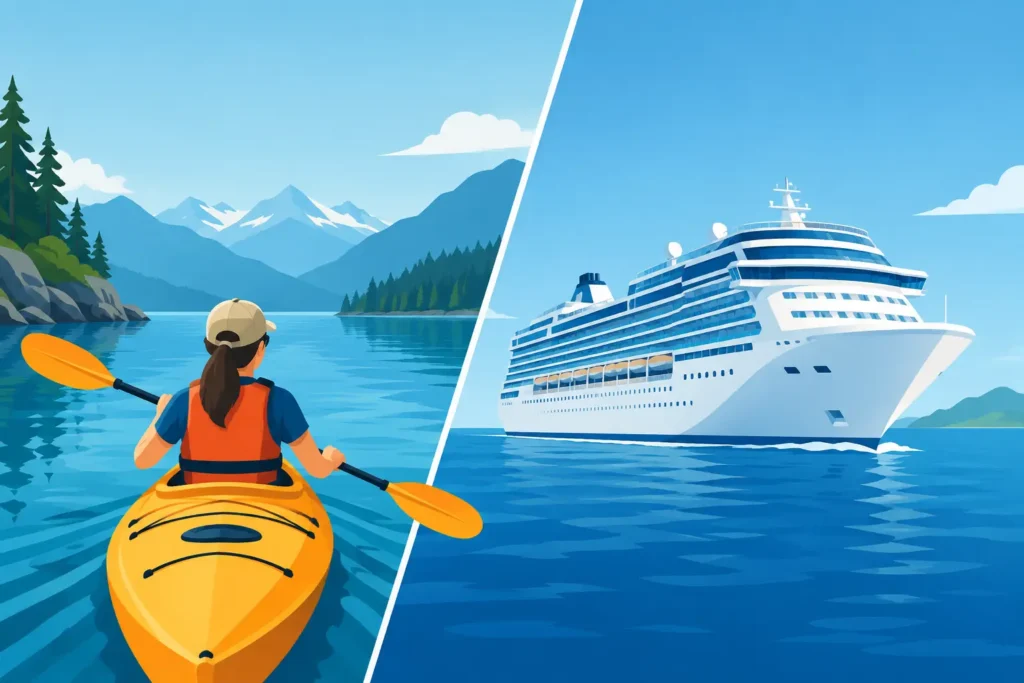
A ship can carry you past a tropical coastline. A sea kayak lets you hear the howler monkeys before you see them, slip into a quiet mangrove channel, and land on a beach with no pier in sight. That is the essential choice in kayak tours versus cruises: do you want to observe a destination from a floating resort, or move through it under your own power?
Neither style is automatically better. The right trip depends on what you want your vacation to feel like at the end of the day. For travelers drawn to wild coastlines, rainforest wildlife, and small-group adventure with expert support, a guided kayaking expedition creates a very different kind of access.
Kayak Tours Versus Cruises: The Real Difference
The biggest contrast is not the vessel. It is your relationship with the place you came to see.
On a traditional cruise, the ship is the destination as much as the ports are. Cabins, dining rooms, entertainment, pools, and scheduled shore excursions create an easy, highly contained vacation. You unpack once, choose how active you want to be, and let the crew handle nearly every detail. For multigenerational groups, travelers with limited mobility, or anyone who wants a broad sampling of several destinations with maximum comfort, that can be exactly the point.
A guided sea kayaking trip is built around direct participation. You paddle along a coast, across protected bays, or through rainforest waterways, usually traveling in a small group with professional guides. The pace is purposeful but not punishing. It is designed to get you beyond crowded docks and into places where large vessels cannot go: a sheltered cove in Golfo Dulce, a nesting beach near Tortuguero, or a coral-fringed island in Panama’s San Blas archipelago.
The day has more texture. You may watch scarlet macaws cross the shoreline at breakfast, paddle beneath a green wall of forest, snorkel after lunch, and arrive at an ecolodge or camp with the satisfying fatigue of having earned the view. Comfort still matters, but it comes from good equipment, thoughtful logistics, knowledgeable guides, and well-chosen overnight stops rather than a casino or midnight buffet.
Access: Ports of Call or Places Without Ports
Cruises are designed around infrastructure. Even a smaller expedition ship needs suitable anchorages, tenders, docks, and reliable ways to move a large number of guests ashore. That naturally concentrates itineraries around established ports and popular attractions.
Kayaks work on a radically smaller scale. A group can launch from a quiet beach, follow the edge of a mangrove estuary, and stop where the conditions and wildlife invite a closer look. In Costa Rica and Panama, that access matters. Some of the most rewarding coastal landscapes are defined by their lack of development.
This does not mean a kayak expedition is a constant push into the unknown. A well-run itinerary is carefully scouted and supported. Guides plan routes around tides, wind, weather, group ability, water conditions, landing sites, and emergency access. The experience may feel remote because it is remote, but it should never feel improvised.
For travelers who have visited a port, taken a quick excursion, and wished they could stay after the crowds departed, this is often the deciding factor. Kayaking replaces a brief shore visit with days of moving through one ecosystem.
Wildlife Encounters Are More Than a Photo Stop
Cruise itineraries can include excellent wildlife excursions, particularly on smaller nature-focused ships. But the rhythm is often compressed. Guests arrive at a viewing area within a fixed window, then return to the ship for the next scheduled departure.
On a multi-day kayak journey, wildlife observation is woven into the route. You are moving quietly and slowly enough to notice details: a basilisk lizard running along the bank, dolphins surfacing in the distance, a sloth tucked into a tree above a narrow channel, or the flash of a kingfisher near your bow. In Tortuguero, waterways and rainforest create a setting where the transit itself is part of the wildlife experience.
There are no guarantees in nature, and responsible guides will not promise a particular animal on command. That uncertainty is part of the reward. A kayaking trip creates time in the habitat, not a checklist stop. The more attentive you are, the more the landscape tends to reveal.
Activity Level: Challenging Enough to Feel Real
Many travelers hear “sea kayaking expedition” and imagine an elite endurance event. In reality, a quality guided trip can be accessible to beginners with reasonable fitness, a willingness to be active, and the right expectations.
You do not need to arrive as a polished paddler. Guides teach efficient strokes, boat handling, and on-water safety procedures. Double kayaks can be a strong option for couples or anyone who wants to share the work. Routes are selected with the group’s experience and the day’s conditions in mind, while the trip plan includes rest breaks, swims, snacks, and time to absorb the surroundings.
Still, this is active travel. You may paddle for several hours over the course of a day, help carry personal items at landings, and spend time in sun, heat, rain, and saltwater. A cruise asks almost nothing physically unless you choose an active excursion. A kayak expedition asks you to participate, then gives something meaningful back: stronger memories, a deeper sense of place, and the quiet confidence that comes from traveling under your own power.
Comfort Means Different Things on Each Trip
If your nonnegotiable is a private balcony, multiple restaurants, nightly shows, and a large menu of onboard diversions, a cruise will win easily. It is built to provide predictable comfort at scale.
But adventure travelers often define comfort differently. They want dry bags packed properly, reliable boats and paddles, guides who know when a weather system is changing, cold drinking water at the right moment, and accommodations that let them rest well after a full day outside. They want local meals, a warm shower when available, and a small group where their questions do not get lost.
Depending on the itinerary, overnight stays may range from welcoming ecolodges to beach camps. Camping brings you closer to the coast and the night sounds of the tropics, while lodge-to-lodge routes add more amenities without losing the expedition spirit. Neither is luxury cruising, and that is the honest trade-off. The reward is waking up where a large ship could never take you.
Group Size Changes the Entire Experience
A cruise ship can be a remarkable feat of organization, but even a modest vessel carries far more people than a guided paddle group. That shapes everything from boarding a tender to finding a quiet moment on shore.
Small-group kayaking is personal by design. Guides can adjust instruction, notice when someone needs a slower pace, share the natural history behind a distant bird call, and make sure each guest is comfortable on the water. Meals and evenings become conversations rather than crowds. You travel with a team, not a mass of fellow passengers.
That intimacy also requires a little flexibility. Weather may change the day’s route. A wildlife sighting may slow the group down. The best expedition leaders make those decisions clearly and conservatively, putting safety first while preserving the adventure. For many guests, that responsive, human element is precisely what makes the trip feel special.
Cost: Compare What Is Actually Included
Cruise fares can look appealing at first glance, especially when accommodations and meals are bundled. Yet the final cost may rise with drinks, specialty dining, gratuities, Wi-Fi, port fees, transfers, and paid shore excursions. The value can still be excellent, but compare the full trip rather than the headline fare.
Guided kayaking expeditions are typically premium, all-inclusive-style experiences with a smaller operating scale. Your fee supports specialized guides, quality sea kayaks and safety gear, route planning, local logistics, meals on many itineraries, accommodations or camping systems, and transportation that gets a small group into places that are harder to reach. The price reflects hands-on service and destination expertise, not simply a bed for the night.
Ask what is included, what physical preparation is recommended, how emergency procedures work, and how the operator manages weather decisions. The answers tell you far more about a trip than the lowest advertised price.
Choose the Vacation You Will Talk About Later
Choose a cruise if you want abundant onboard options, minimal physical demands, and the ease of sampling several ports with a high level of predictable comfort. It can be a great way to celebrate, relax, or travel with a group whose needs vary widely.
Choose a sea kayaking expedition if you want the tropics to feel close. If you would rather trade elevator rides for paddle strokes, crowded terminals for mangrove channels, and a quick excursion for genuine time in the wild, the difference is immediate. Sea Kayaking Costa Rica builds that experience around small groups, expert leadership, and carefully planned routes through some of Central America’s most extraordinary coastal country.
The best trip is not the one with the longest list of amenities. It is the one that gives you the stories you wanted to bring home: the rain on the water, the silhouette of rainforest at dusk, and the moment you realized there was no sound around you but your paddle entering the sea.