Costa Rica Wildlife Kayaking Trip Guide
July 10, 2026
What a Lodge to Lodge Kayaking Trip Feels Like
July 12, 2026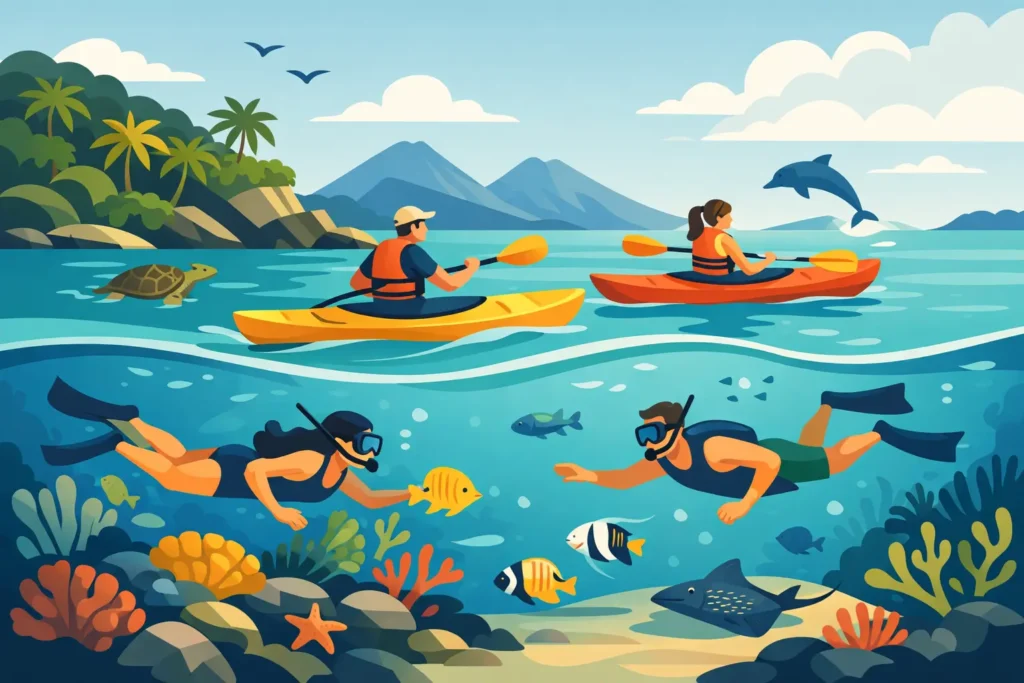
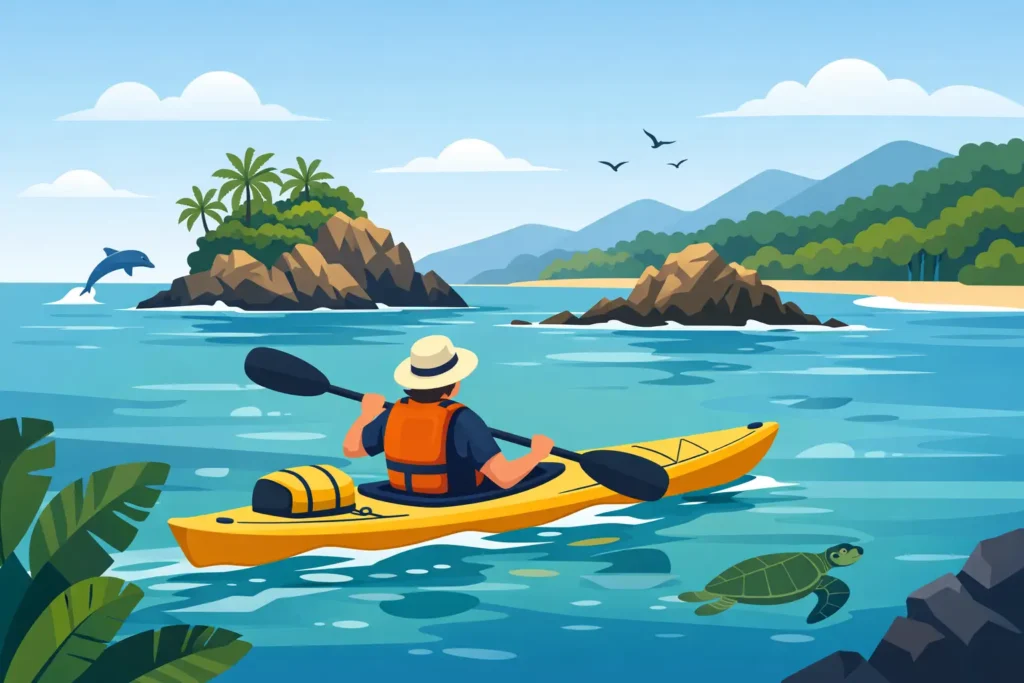
The best days on the water in Costa Rica do not begin at a crowded marina. They begin with a quiet launch beside rainforest, a loaded sea kayak, and the possibility that a dolphin, scarlet macaw, or green sea turtle may appear before breakfast. Kayaking and snorkeling Costa Rica can be an exceptional combination, but the experience depends heavily on where you go, when you travel, and how much support you want in remote coastal country.
For travelers who want more than a quick beach excursion, a guided sea kayaking expedition creates access to wild shorelines, protected gulfs, island reefs, and coastal communities that are difficult to reach any other way. The reward is not simply time underwater. It is moving through the landscape at the pace of the tides, then stepping ashore with the rainforest still close enough to hear.
Why Costa Rica Works So Well From a Kayak
Costa Rica has two very different coasts, each with its own character. The Pacific is generally the stronger choice for combining sea kayaking, snorkeling, sheltered paddling, and island exploration. The Caribbean offers extraordinary wildlife and a true sense of expedition, especially around Tortuguero, but its open-water conditions and river systems do not always produce clear snorkeling water.
That distinction matters when choosing a trip. If your priority is marine life beneath the surface, calm-water paddling, and warm Pacific coves, Golfo Dulce is one of the country’s standout regions. If your priority is rainforest wildlife, canals, nesting turtles in season, and a paddling route far removed from roads, Tortuguero delivers something entirely different.
A good itinerary makes room for both activity and observation. Paddling several miles in tropical heat is rewarding, but it is not a race. The strongest expeditions balance active days with ample time to snorkel, swim, watch for wildlife, enjoy a cold drink at an ecolodge, and recover for the next day’s route.
Golfo Dulce: The Strongest Choice for Kayaking and Snorkeling in Costa Rica
On the southern Pacific coast, Golfo Dulce is a deep, protected tropical gulf backed by some of Costa Rica’s most intact rainforest. Its geography helps create generally manageable sea kayaking conditions, while its isolated beaches and nearby reef habitat offer a more immersive alternative to a day trip from a busy resort town.
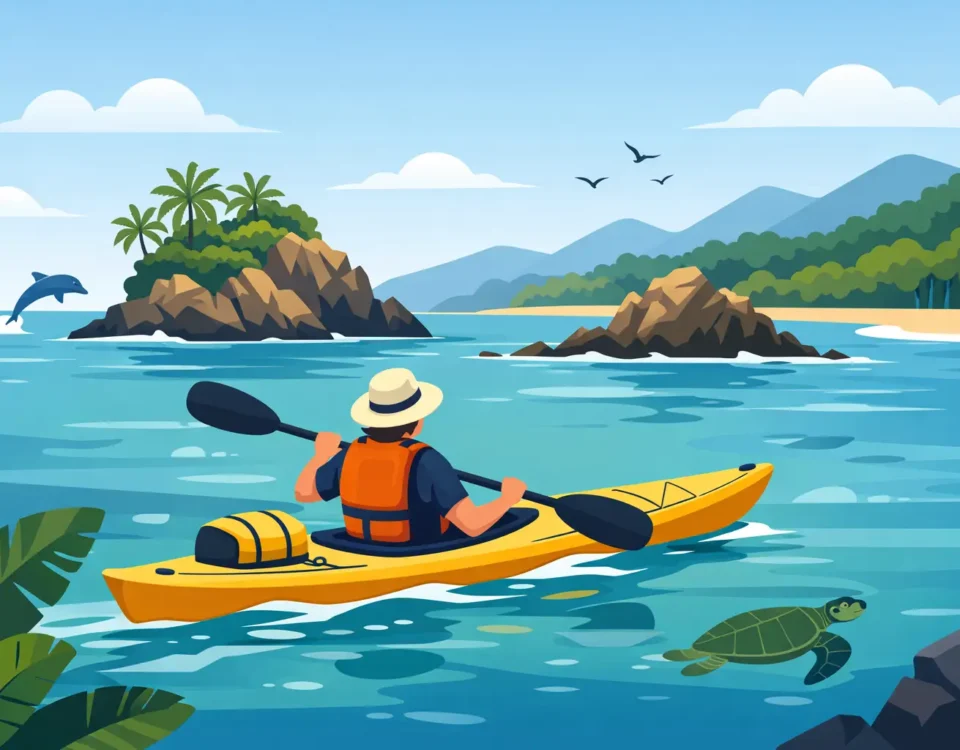
This is the kind of place where a morning paddle can include bottlenose dolphins traveling along the coast, with the chance to snorkel later in a protected cove. The visibility varies with weather, tides, and recent rain, as it does anywhere in the tropics, so no responsible outfitter should promise aquarium-clear water every day. Still, the gulf’s warm water and remote shoreline make it a compelling setting for travelers who want kayaking to be the centerpiece rather than an add-on.
The experience above water is equally important. Scarlet macaws often call from coastal trees, monkeys move through the forest canopy, and the shoreline feels notably less developed than much of Costa Rica’s better-known beach corridor. Multi-day travel is especially rewarding here because the most memorable camps, lodges, and launch points are often not connected by a simple road transfer.
What snorkeling is really like in Golfo Dulce
Snorkeling in Golfo Dulce is best approached as a wildlife-rich part of a broader expedition, not as a replacement for a dedicated Caribbean reef vacation. You may encounter colorful reef fish, rays, sea turtles, and fascinating coastal marine life among rocky reefs and coral patches. Conditions are usually best during calmer stretches of weather and away from runoff after heavy rain.
Experienced guides assess the water before guests enter, considering swell, current, visibility, boat traffic, and the group’s comfort level. That judgment is one reason a professionally guided trip is valuable. A location that looks calm from shore can still have changing conditions around a headland or reef edge.
Tortuguero: Choose Wildlife Over Snorkeling
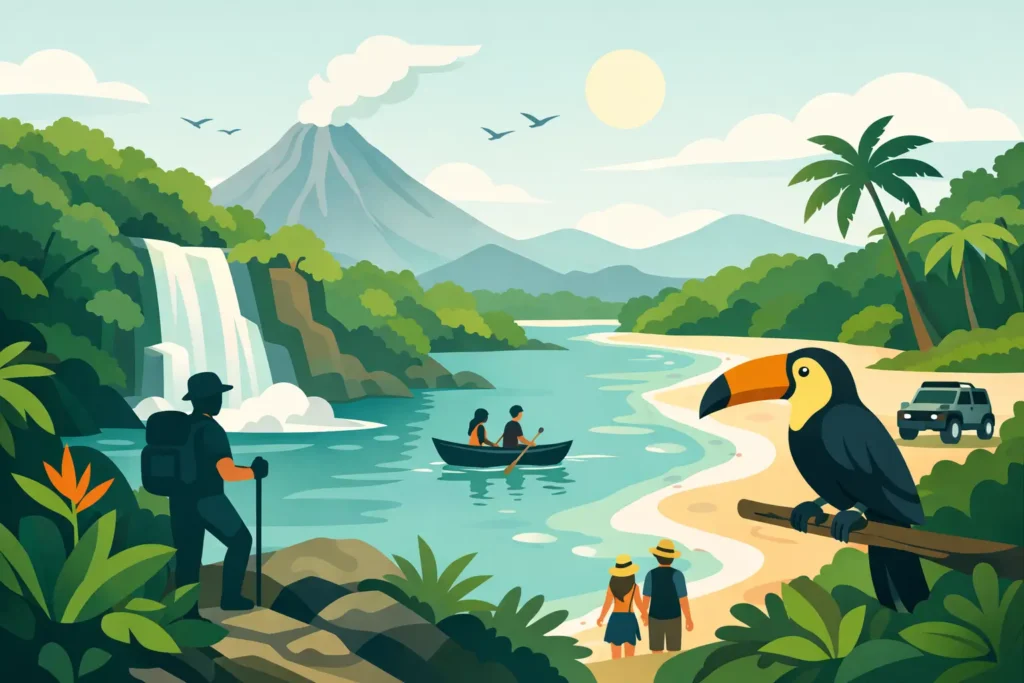
Tortuguero, on Costa Rica’s Caribbean coast, is a different kind of paddle. Here, narrow waterways wind through lowland rainforest, lagoons, and wetlands where the forest comes directly to the water. You are far more likely to spend a morning watching monkeys, caimans, river otters, basilisk lizards, and tropical birds than searching for a reef.
For active travelers, that is not a compromise. It is a distinct expedition experience. Kayaking allows for quiet, low-impact travel through habitat where noise carries and wildlife encounters can be remarkably close. During sea turtle nesting season, Tortuguero also has global conservation significance, although wildlife sightings should always be treated as a privilege rather than a guarantee.
The trade-off is straightforward: Tortuguero is outstanding for wildlife-focused kayaking, but it is not the primary destination for a snorkeling-centered trip. Travelers hoping to spend significant time on a mask and fins should lean toward the Pacific or build a two-region Costa Rica itinerary.
When to Go for Better Water Conditions
Costa Rica is tropical, which means water-based travel is possible year-round. But the best timing depends on your priorities and your willingness to embrace variable weather.
On the Pacific coast, the drier months from roughly December through April often bring sunnier conditions and more dependable access for coastal activities. This is also a popular travel period, so advance planning matters. The green season, generally May through November, brings lush landscapes, fewer visitors in some areas, and afternoon rain patterns. It can be spectacular for rainforest immersion, but heavy rain may reduce snorkeling visibility near river mouths.
The southern Pacific follows its own rhythm and can receive substantial rainfall. Rather than choosing a trip based on a single weather chart, consider the full expedition: route protection, local guide knowledge, flexible activity planning, and the kind of experience you value most. A dramatic afternoon rainstorm can be part of the story, provided the itinerary is designed with safety and comfort in mind.
What Makes a Guided Expedition Worth It
Costa Rica can look simple on a map, but remote-coast travel has real logistical layers. Launch locations, tides, weather windows, gear transport, lodging, permits, food, emergency planning, and ground transfers all require coordination. For independent travelers, arranging each piece can consume a surprising amount of vacation time.
A premium guided expedition handles those details while preserving the feeling of genuine adventure. Your guides should know when to change a route, where to find a protected landing, how to fit a sea kayak correctly, and which wildlife practices keep encounters respectful. They should also carry communication equipment, first-aid supplies, and a clear emergency plan appropriate to the route.
This support does not mean the experience is passive. You still paddle your own boat, carry your share of the day, and earn the views from the water. It means that when the wind changes or a tropical squall forms offshore, an experienced team is making decisions before a small problem becomes a hard day.
Sea Kayaking Costa Rica designs small-group, multi-day expeditions around this balance: remote access, quality equipment, thoughtful logistics, and guides who know these coasts well. For many guests, the value lies in spending their energy on the experience rather than on figuring out every transfer and tide chart alone.
How Fit Do You Need to Be?
You do not need to be an elite athlete to enjoy a guided sea kayaking trip, but you should arrive ready for active days. Expect repeated paddling sessions, heat and humidity, getting in and out of kayaks from beaches or docks, and the occasional wet landing. Basic swimming ability and comfort in open water are essential for any itinerary that includes snorkeling.
Previous sea kayaking experience can help, but it is not always required. Well-designed trips include instruction on efficient paddle strokes, boat handling, safety procedures, and snorkeling protocols. The better question is whether you enjoy being outside for several hours, can follow guide direction, and are comfortable with a little unpredictability.
Be honest about injuries, medical conditions, and confidence in the water when speaking with an outfitter. A smaller group and the right route can make a major difference for less-experienced paddlers, while stronger paddlers may prefer longer crossings or a more ambitious expedition pace.
Pack for the Water, Not the Resort
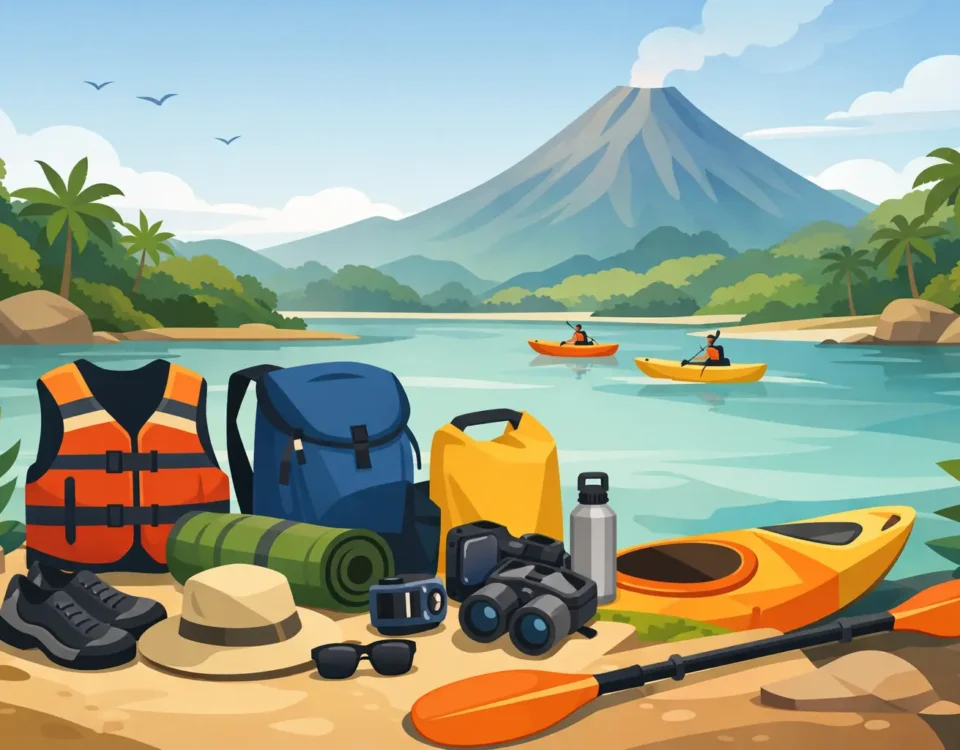
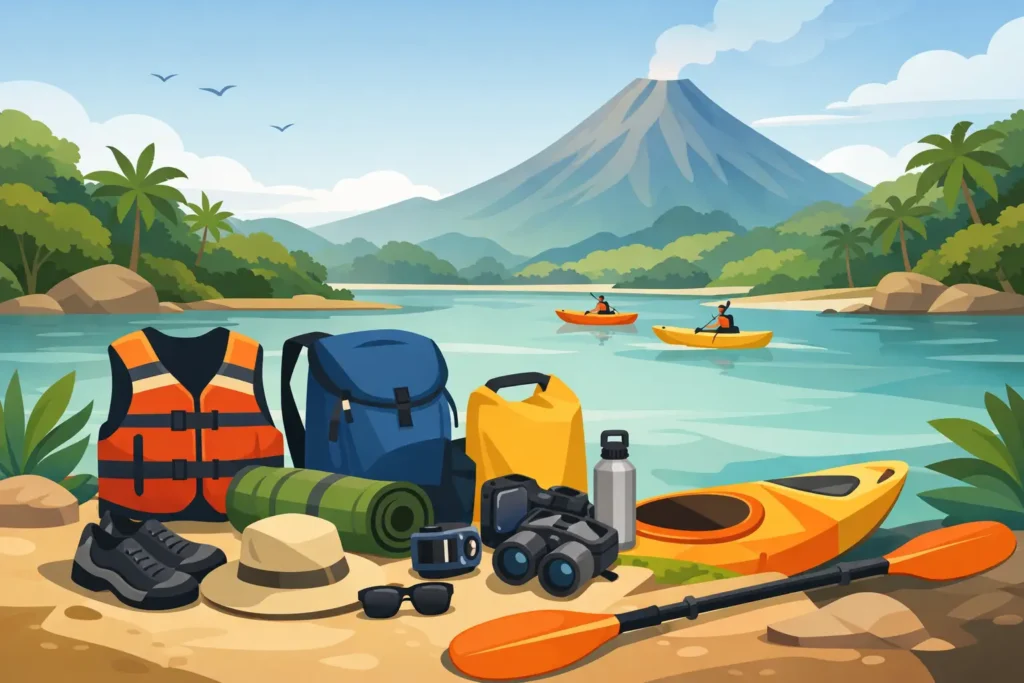
The right kit makes tropical paddling far more comfortable. Bring sun-protective clothing, a brimmed hat with a retention strap, polarized sunglasses on a leash, reef-safe sunscreen, a reusable water bottle, quick-drying layers, and footwear that can handle wet landings. A rash guard is useful for both sun protection and snorkeling, while a lightweight rain jacket earns its place even in the dry season.
Most quality guided trips provide properly fitted sea kayaks, paddles, flotation devices, dry bags, and snorkeling equipment. If you have a mask that fits your face perfectly, bringing it can be worthwhile. A poorly fitting mask is a small problem that becomes frustrating quickly when the water is full of life.
Choose the route that matches the story you want to bring home. In Golfo Dulce, that may be a quiet cove, a snorkel fin cutting through clear water, and macaws crossing overhead as you paddle toward camp. In Tortuguero, it may be the stillness of a rainforest canal before the birds begin calling. The right expedition gives you enough time to notice both.