
Kayak Safety for Tropical Coastal Expeditions
November 22, 2026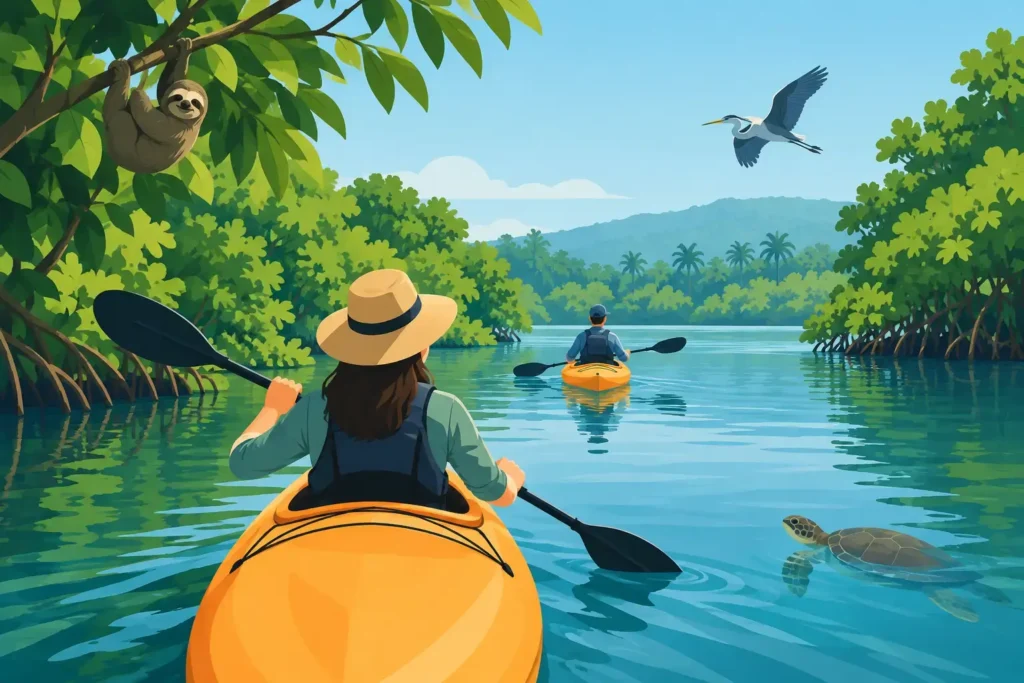
Tortuguero tours are often sold as a quick wildlife stop. That misses the point. This is a roadless maze of rainforest canals, blackwater lagoons, coastal beaches, and small communities on Costa Rica’s Caribbean side. The best way to understand it is from water level, moving quietly enough to hear howler monkeys in the canopy and see a caiman slip beneath the surface.
For active travelers, Tortuguero is not about racing through a checklist of animals or spending every day on a motorboat. It is an expedition destination. A well-designed guided kayaking trip puts you in the right places at the right pace, with knowledgeable local leadership, dependable logistics, and enough time for the forest to reveal itself.
What Makes Tortuguero Different
Tortuguero National Park protects one of Costa Rica’s most important Caribbean lowland ecosystems. Rainfall feeds an extensive network of waterways behind a long barrier beach, while dense rainforest presses close to the canal edges. There are no roads leading into the village or most lodges. Boats are not an optional excursion here. They are part of daily life.
That access changes the travel experience. A boat transfer can get you to a lodge, but a kayak lets you travel through narrow side channels that larger craft cannot enter. There is no engine noise between you and the forest. You can pause when a guide hears wingbeats overhead, spots a three-toed sloth, or notices ripples along a muddy bank.
This setting also rewards patience. Wildlife is never guaranteed, and travelers should be wary of itineraries that promise it. Conditions shift with rainfall, water levels, fruiting seasons, and the habits of animals that remain wild precisely because the region still has space for them. What expert guides provide is something more valuable than a promise: sharp local observation, safe route choices, and the judgment to slow down when a moment is worth watching.
Choosing Between Tortuguero Tours
The right trip depends less on whether you want to see nature and more on how you want to experience it. Many visitors choose a one- or two-night lodge package with transfers, canal boat rides, and a guided walk. This works well for travelers with limited time, families looking for a low-activity wildlife visit, or anyone adding Tortuguero to a broader Costa Rica itinerary.
A multi-day kayaking expedition is a different commitment and, for many active travelers, a far richer one. You cover meaningful distance under your own power, paddle varied waterways, spend more time outside, and develop a more intimate sense of the landscape. Days usually balance active travel with unhurried wildlife observation, lodge comfort, good meals, and time to recover before the next outing.
When comparing Tortuguero tours, look beyond the number of nights and the headline price. Ask whether the operator uses small groups, how much actual paddling is included, and whether the itinerary has flexibility for weather and wildlife. Find out who leads the trip, what safety systems are in place, and how gear is maintained. In a remote, water-based environment, those details are central to the experience.
A strong operator should clearly explain the daily rhythm. You should know whether mornings begin early, how long you may be on the water, where meals and overnight stays occur, and what support is available if conditions change. Clear planning does not make an adventure less adventurous. It gives you the confidence to be present once the trip begins.
Why Kayaking Is the Better Wildlife Platform
Motorboats have a practical role in Tortuguero, especially for arrivals, departures, and long transfers. But for exploring, sea kayaks offer a distinct advantage. Their quiet approach causes less disruption, their low profile brings you close to the water, and their maneuverability opens routes through calm canals and sheltered lagoons.
The pace matters as much as the craft. A typical paddling day is not a fitness test from dawn to dusk. It is a sequence of steady effort, floating observation, photo stops, and breaks. Your guide can interpret animal behavior, point out lesser-known species, and explain how the waterways connect the park, village, farms, and coastal habitat.
You may encounter green iguanas, basilisk lizards, river turtles, herons, kingfishers, toucans, and monkeys. Caimans are common, though they generally avoid people. Manatees inhabit the wider canal system but are elusive. Turtle nesting is the region’s most famous natural event, yet nesting activity is seasonal and access is carefully managed. The right mindset is simple: come for the whole ecosystem, not one guaranteed sighting.
When to Go to Tortuguero
Tortuguero is wet for much of the year. That is not a flaw in the destination. Rain sustains the rainforest, fills the canals, and gives the landscape its deep green intensity. It does mean travelers should expect humidity, occasional downpours, muddy trails, and changing paddling conditions.
Sea turtle nesting generally peaks at different times depending on the species. Green turtles are most closely associated with the main nesting season from roughly July through October, while leatherbacks typically arrive earlier in the year. Exact timing varies, and responsible viewing depends on local rules, guided access, and respect for nesting beaches after dark.
For kayaking, the best period depends on your priorities. Travelers focused on turtle activity may accept wetter conditions and busier lodge availability. Those seeking a quieter paddling trip may prefer shoulder periods, when there can be fewer visitors but still plenty of rain and wildlife. There is no completely dry, predictable version of Tortuguero. Pack for tropical weather and treat rain as part of the expedition.
How Fit Do You Need to Be?
You do not need to be an elite paddler to enjoy a professionally guided Tortuguero kayaking trip. You do need a reasonable base of fitness, comfort around water, and the willingness to be active for several days in heat and humidity. Prior kayaking experience helps, but sound instruction and quality, properly fitted equipment make a major difference for first-timers.
Be honest about your expectations before booking. A traveler who enjoys long walks, cycling, or other steady aerobic activity will often adapt well to moderate daily paddling. Shoulder or back concerns, a fear of deep water, and limited comfort sitting for extended periods are worth discussing early. The best expedition companies can explain trip demands plainly and help you decide whether the route and pace are right for you.
This is also where small groups matter. Guides can provide better coaching, adapt the day’s rhythm when appropriate, and keep a closer watch on each guest. At Sea Kayaking Costa Rica, that approach is built around carefully managed logistics, professional guiding, and the kind of personal attention that remote travel demands.
Pack for Water, Heat, and Changing Weather
Packing well makes every day more comfortable. Quick-drying layers, a reliable rain jacket, sun-protective clothing, sandals or water shoes that stay secure, insect repellent, and a reusable water bottle are more useful than a large wardrobe. A dry bag for essentials is not a luxury when cameras, medication, and extra layers travel by kayak.
Bring binoculars if wildlife is a major priority, but keep expectations practical. Heavy camera setups can be difficult to protect and use from a small boat, especially in rain. Many travelers are happier with a compact camera or phone in a dependable waterproof case, then spend more time looking than managing gear.
Your guide or outfitter should provide a detailed packing list specific to the itinerary. Follow it closely. Remote destinations reward preparation, and forgotten items may not be easy to replace once you are on the water.
Travel Responsibly in a Sensitive Place
Tortuguero’s wildlife is the reason people come, but tourism only supports conservation when visitors behave with care. Keep a respectful distance from animals, never feed wildlife, and let guides set the pace around sightings. On nesting beaches, follow regulations without exception. Flash photography, noise, and careless movement can interfere with turtles at a critical moment.
Choose operators that employ experienced local guides, work with established lodges and transport providers, and treat safety and low-impact travel as operational standards rather than marketing language. Your trip should benefit from local knowledge while respecting the communities and ecosystems that make the region exceptional.
The reward for choosing a thoughtful Tortuguero journey is not simply a longer animal list. It is the memory of paddling through still water as the rainforest wakes up around you, with the confidence that every mile has been planned to bring you closer to the wild without asking the wild to change for you.