How to Choose Expedition Dates for Costa Rica
August 24, 2026
How to Vet Adventure Operators Before Booking
August 28, 2026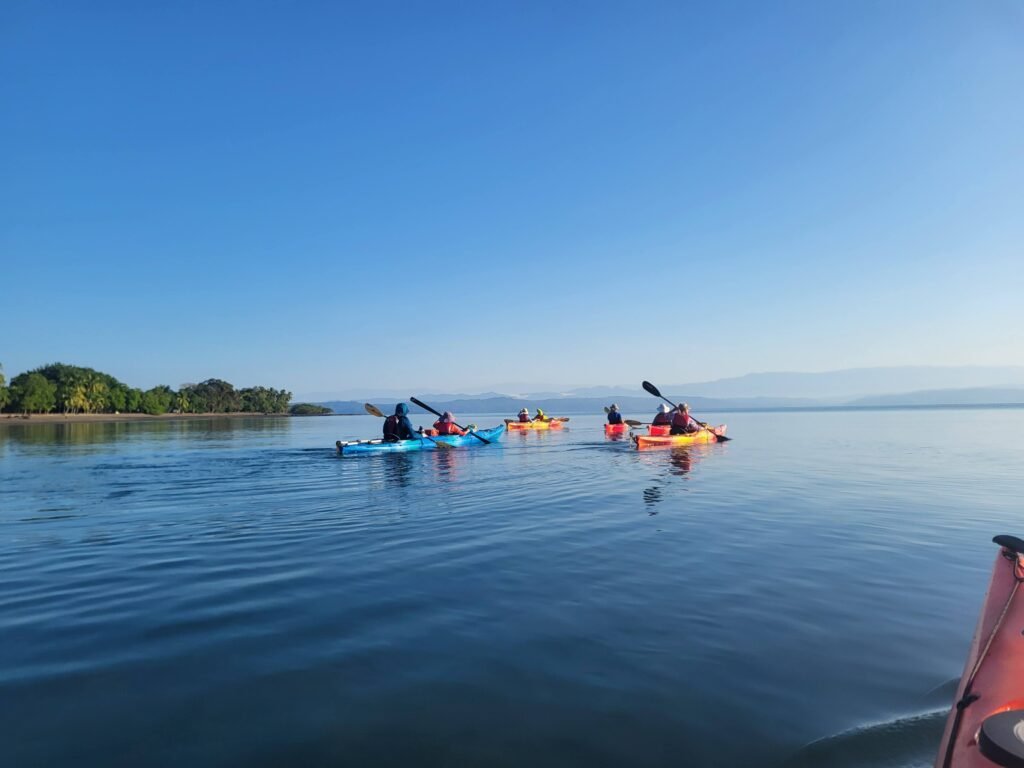
The best Costa Rica coastal adventures begin where the road ends: in a quiet gulf beneath rainforest-covered slopes, on a turtle-nesting beach before sunrise, or offshore with nothing but paddle strokes between you and a hidden cove. Costa Rica’s coast is not one experience. The Pacific and Caribbean offer radically different water, wildlife, weather, and pace – which is exactly why choosing the right trip matters.
For active travelers, the strongest coastal experiences do more than put you near the ocean. They get you moving through the landscape with knowledgeable guides, well-planned logistics, and enough time to notice the details: scarlet macaws crossing a bay, a three-toed sloth in the canopy, reef fish below your mask, or a fishing village coming alive at first light.
1. Sea Kayak Through Golfo Dulce
Golfo Dulce, on Costa Rica’s remote southern Pacific coast, is one of the country’s great expedition paddling destinations. This protected tropical fjord is framed by the Osa Peninsula and the mainland, with rainforest descending right to the waterline. Its sheltered conditions make it an excellent setting for multi-day sea kayaking, while its remoteness keeps the experience feeling genuinely wild.
A lodge-to-lodge kayaking journey here is about more than covering miles. Each day can bring a new stretch of coastline, secluded beaches, snorkeling opportunities, and wildlife encounters. Dolphins are regularly seen in the gulf, while monkeys, toucans, macaws, and other rainforest residents are part of the daily scenery ashore.
This is a strong choice for travelers who want active days without rough open-ocean crossings. Conditions still change with wind and weather, so professional route planning and guides who know the coast are essential. A well-run expedition also handles the practical work – transfers, quality boats, safety systems, meals, and overnight logistics – so guests can focus on the experience.
2. Paddle Tortuguero’s Wildlife-Rich Canals
Tortuguero is not about wide blue-water horizons. It is a labyrinth of freshwater canals, lagoons, and narrow waterways bordered by dense Caribbean rainforest. Kayaking here delivers an intimate view of one of Costa Rica’s most wildlife-rich regions, where a quiet paddle is often the best way to see the forest at work.
Look closely and the canal banks begin to move. Green iguanas bask in branches. Howler monkeys announce the morning. Caimans rest near the water’s edge, and colorful birds flash through the trees. During turtle nesting season, the area is especially famous for sea turtle activity on the nearby beach.
Tortuguero suits travelers who prioritize wildlife observation over athletic mileage. The paddling is generally accessible, but the humidity, frequent rain, and close jungle environment are part of the experience. Bring a sense of curiosity, quick-drying layers, and a willingness to trade polished resort comforts for an extraordinary natural setting.
3. Snorkel the Reefs of Cahuita
On the southern Caribbean coast, Cahuita offers a slower, more laid-back coastal adventure with a serious ecological payoff. Offshore coral reefs support a colorful mix of tropical fish, rays, and other marine life, while the beach and forest create a beautiful setting for a full day outside.
Snorkeling conditions here depend heavily on weather, rainfall, and water clarity. When the sea is calm and visibility is good, Cahuita can be one of the most rewarding places in Costa Rica to get in the water. When conditions are poor, it is smarter to shift plans toward hiking the coastal trails, watching wildlife, or exploring the area’s distinct Afro-Caribbean culture and cuisine.
That trade-off is worth understanding before you book. Cahuita is best for travelers who can stay flexible and appreciate that nature, not a fixed schedule, sets the terms of the day.
4. Surf the Pacific With a Purpose
Costa Rica’s Pacific coast has surf breaks for nearly every level, from first-time lessons on forgiving beach breaks to powerful waves that demand real experience. Tamarindo and Nosara are popular choices for beginners and improving surfers, while Santa Teresa attracts travelers looking for a more energetic beach-town scene and consistent surf.
The best surf trip is not always the one with the biggest wave. Beginners benefit from patient instruction, appropriate boards, and a break suited to their ability. More experienced surfers should consider season, swell direction, local currents, and the reality that some of the country’s most famous waves are not casual sessions.
Pair surfing with a coastal itinerary rather than treating it as an all-day contest. An early session, a shaded lunch, and a late-afternoon walk through the forest can make the experience more sustainable – and far more enjoyable – in tropical heat.
5. Watch Whales and Dolphins Off the Osa Coast
The waters around the Osa Peninsula are among the most compelling places in Costa Rica for marine wildlife. Humpback whales use these Pacific waters during extended portions of the year, and dolphin sightings are common in areas such as Golfo Dulce and the coast near Drake Bay.
A responsible wildlife outing should feel like observation, not pursuit. Boats need to give animals room, limit their time around a sighting, and avoid crowding or cutting across travel paths. The best guides know how to read behavior and will explain what you are seeing rather than simply racing from one encounter to the next.
Whale watching is especially rewarding for travelers who want a low-impact addition to a more active trip. It also pairs naturally with kayaking, snorkeling, or rainforest hiking, creating a fuller picture of the Osa’s connected land and sea ecosystems.
6. Hike the Coastline in Corcovado
Corcovado National Park is often discussed as a rainforest destination, but its coastal sections deliver some of Costa Rica’s most dramatic shore-based adventure. Trails pass beaches, river mouths, thick forest, and remote stretches where animal tracks can be more common than footprints.
This is serious terrain, not a casual beach walk. Heat, mud, river crossings, insects, and long distances all factor into the day. A guided hike brings practical safety, local interpretation, and a much better chance of spotting the wildlife that makes Corcovado legendary, including tapirs, monkeys, macaws, and, for the exceptionally fortunate, wild cats.
Choose Corcovado if you want the coastline to feel untamed. It is less about lounging by the sea and more about earning the view through a full day in one of Central America’s greatest wilderness areas.
7. Explore Remote Beaches by Boat and Paddle
Some of Costa Rica’s most memorable shores are difficult to reach by road, especially along the Osa Peninsula and sections of the southern Pacific. Reaching them by boat or sea kayak changes the rhythm of the trip. Instead of arriving with a crowd, you approach quietly from the water, land on an empty beach, and see the rainforest from its most dramatic angle.
This kind of day works best as part of a guided expedition. Tides, landing conditions, wind exposure, and distance all shape the route. Expert guides can select protected coves, time crossings well, and build in stops for swimming, snorkeling, lunch, and natural history.
Sea Kayaking Costa Rica specializes in this style of travel: small-group journeys that combine active coastal exploration with carefully supported overnights, local knowledge, and meaningful time away from busy resort zones.
8. Camp Near the Coast, Then Wake Up With the Forest
For many travelers, the most powerful coastal moment happens before the day’s activity begins. Camping near a remote beach or staying at a small ecolodge lets the landscape set the schedule. You wake to surf, birdsong, and humid forest air instead of traffic and hotel hallways.
The comfort level varies. Ecolodges provide a softer landing, often with private rooms and prepared meals, while expedition camping is more elemental and more dependent on weather. Neither is automatically better. Couples seeking adventure with comfort may prefer lodge-based routes, while travelers drawn to self-contained wilderness days may value camping’s simplicity.
A good outfitter makes either option feel organized rather than improvised. Clean gear, thoughtful meal planning, dry storage, clear safety procedures, and a competent guide team are what turn a remote overnight into a confident adventure.
How to Choose the Right Coastal Adventure
Start with the experience you want to remember. Choose Golfo Dulce for multi-day paddling and rainforest-fringed water, Tortuguero for close wildlife encounters, Cahuita for Caribbean snorkeling, and the Osa coast for big wilderness energy. Surfing makes sense when riding waves is the priority; whale watching is ideal when you want a marine encounter without the physical commitment of a full expedition.
Then be honest about your preferred pace. You do not need to be an elite athlete for a guided kayaking trip, but you should be comfortable being active for several hours and willing to work with changing tropical conditions. The right itinerary balances challenge with support, leaving room to enjoy the wildlife and place rather than merely push through the day.
Costa Rica’s coastline rewards travelers who go beyond the beach chair. Pick an adventure that matches your energy, trust the conditions, and give yourself enough time for the coast to reveal what it does best.