
Best Tropical Wildlife Encounters by Kayak
October 31, 2026
Are Tropical Waters Rough? Kayaking Conditions
November 4, 2026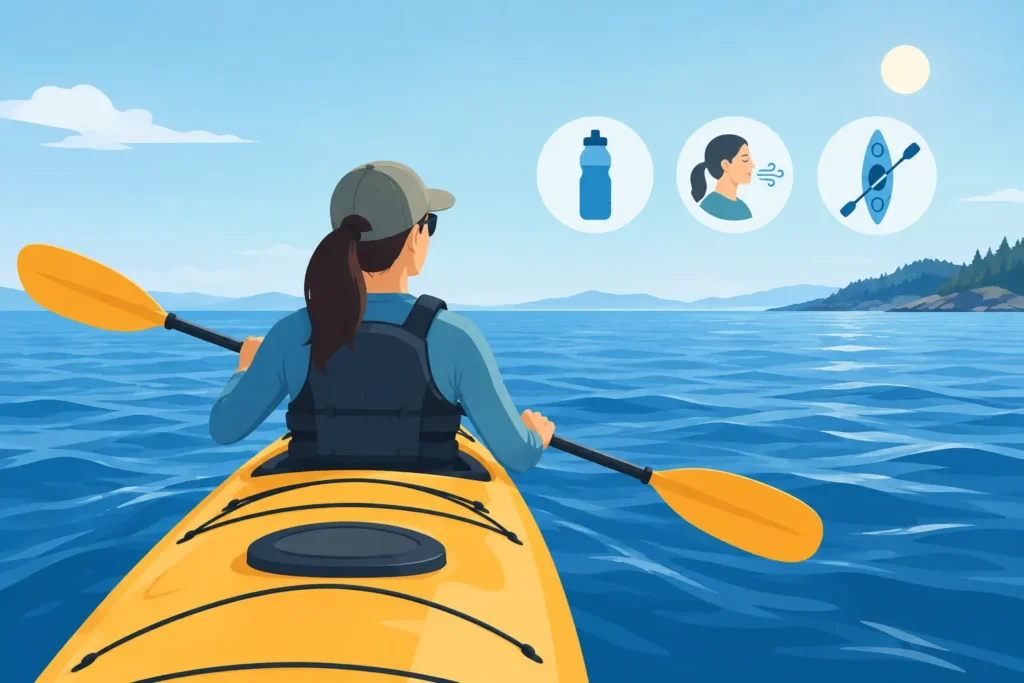
A glassy tropical bay can feel effortless from shore. Once you are offshore, though, a cross-swell, hot sun, and a horizon that will not hold still can quickly change the equation. Knowing how to avoid seasickness kayaking is less about toughness and more about making smart decisions before and during your time on the water.
The good news: most paddlers can reduce their risk dramatically. Preparation, boat handling, hydration, and an honest conversation with your guide all matter. On a guided sea kayaking expedition, the goal is not to prove you can push through discomfort. It is to stay strong enough to enjoy the wildlife, coastline, and hard-earned feeling of reaching camp under your own power.
Why seasickness happens in a kayak
Seasickness begins when the balance system in your inner ear and the visual information reaching your brain do not agree. Your body feels the kayak rise, fall, and roll, while your eyes may be fixed on a nearby deck bag, a camera screen, or the paddler beside you. That mismatch can trigger nausea, sweating, dizziness, fatigue, and, eventually, vomiting.
A sea kayak is often more stable and predictable than a small motorboat, especially when you are actively paddling. But kayaking does not make you immune. Long ocean swells, confused chop, strong glare, heat, dehydration, and anxiety can all make symptoms more likely.
Conditions matter, too. A protected route through Costa Rica’s Golfo Dulce may feel entirely different from an exposed crossing where wind waves meet swell. Experienced guides assess these variables every day and can adjust pace, route, rest stops, and launch timing. Still, your own preparation is a major part of the safety plan.
How to avoid seasickness kayaking before launch
Start the evening before your paddle. Get a full night’s sleep, drink water consistently, and go easy on alcohol. A late night and a few celebratory drinks can leave you dehydrated and more vulnerable to motion sickness before your kayak even touches the water.
Eat a familiar, moderate meal before paddling. Many people do well with simple carbohydrates and some protein, such as oatmeal, toast with eggs, fruit, yogurt, rice, or a sandwich. Do not launch on an empty stomach, but avoid a heavy, greasy breakfast that will sit uncomfortably once the boat starts moving.
Hydration is equally important in the tropics. Sip water steadily rather than waiting until you are thirsty. Electrolytes can help after a sweaty morning, particularly on multi-day expeditions, but they are not a substitute for water and regular meals. Be cautious with overly sweet drinks if they tend to upset your stomach.
If you know you are prone to motion sickness, discuss medication with a medical professional well before your trip. Common over-the-counter options may work best when taken before symptoms begin, not after you feel ill. Some medications cause drowsiness, dry mouth, blurred vision, or slower reaction time. That trade-off matters when you are paddling in heat and need to stay alert around waves, wildlife, and other boats.
Prescription patches and other treatments may be appropriate for certain travelers, but they can also have side effects and may not suit everyone. Test any new medication at home on a normal day. An expedition morning is not the time to find out that a remedy makes you groggy or uncomfortable.
Keep your eyes and body working together
Once you are on the water, give your brain a reliable visual reference. Look toward the horizon or toward a fixed feature on shore. Scan ahead for the route, an island, a headland, or your guide’s kayak. This simple habit helps align what you see with what your body is feeling.
Avoid spending long stretches looking down into the cockpit. Checking a map, sorting snacks, adjusting a dry bag, or reviewing photos can wait for a calm rest stop when possible. If you need to manage something in the boat, tell your guide and take a moment when the group is settled.
Good posture helps more than many paddlers expect. Sit upright with your back supported, shoulders relaxed, and feet connected to the foot braces. Keep your core loose enough to let the kayak move naturally beneath you. Fighting every small roll with a stiff upper body can increase fatigue and make the motion feel more dramatic.
In side chop, think of your hips as shock absorbers. Let the boat move while your head stays relatively level and your gaze stays forward. This is a skill that develops quickly with coaching, which is one advantage of paddling with experienced guides rather than learning in exposed conditions alone.
Paddle at a sustainable pace
Overexertion often gets mistaken for seasickness, and the two can feed each other. If you sprint to keep up, overheat, and stop drinking, nausea becomes far more likely. A steady, efficient stroke is the better strategy for long-distance sea kayaking.
Tell your guide early if you feel off. Do not wait until nausea is severe because you do not want to slow down the group. Professional guides would rather change something when symptoms are mild: adjust your position within the group, shorten an open crossing, add a hydration break, or move you into a calmer section of water.
On a small-group expedition, communication is part of the experience. Guides can also check whether your PFD, spray skirt, or seat is adding unnecessary heat or pressure. Sometimes discomfort comes from being too warm, too thirsty, or too tightly packed into the cockpit, not from the sea state alone.
Use practical gear without overpacking the cockpit
The right gear supports comfort, but a cluttered cockpit creates new problems. Keep immediate essentials accessible and secure: water, sun protection, a small snack, and any approved motion-sickness treatment. Everything else belongs in a dry bag or hatch where it cannot slide around or demand your attention in rough water.
Sun protection is especially relevant in Central America and Panama. Glare off the water can strain your eyes and make you feel worse, so wear polarized sunglasses with a retention strap and a brimmed cap that fits safely under your PFD. Lightweight, breathable paddling clothing helps reduce overheating without restricting movement.
Bring bland snacks you know you tolerate. Crackers, pretzels, plain trail mix, ginger chews, or a simple energy bar can be useful during a break. Ginger helps some people with mild nausea, although it is not a guaranteed cure. Skip strong-smelling foods, very rich snacks, and anything that has a history of upsetting your stomach.
What to do when nausea starts
The first signs are your cue to act. You may feel warm, yawn repeatedly, become unusually tired, or notice a vague unsettled feeling in your stomach. Stop focusing on close objects, look toward the horizon, take slow breaths, and tell your guide right away.
Keep paddling gently if you can do so safely. Active movement and a forward visual focus may help more than sitting still and staring into the cockpit. Take small sips of water. If the group stops, get fresh air, loosen any tight layers, and keep your head up rather than bending over your gear.
Do not be embarrassed if you need to vomit. It is common, manageable, and far preferable to hiding symptoms. Your guides can help position the group safely, clean gear as needed, and decide whether conditions or plans should change. Severe dizziness, confusion, repeated vomiting, chest pain, or signs of heat illness require immediate attention.
Build confidence before a bigger expedition
If you are new to sea kayaking or uncertain how your body responds to open water, build up gradually. Start with a sheltered paddle close to shore, then try a longer outing with gentle swell. Practice eating, drinking, and maintaining a relaxed forward gaze while moving. Familiarity lowers anxiety, and less anxiety often means fewer symptoms.
Be realistic about the conditions you are signing up for. A wildlife-rich coastal journey can include calm lagoon mornings, but ocean travel is never a controlled environment. The best guided trips balance adventure with sound judgment, using local knowledge and flexible planning rather than forcing a route simply because it was written on an itinerary.
A little preparation gives you more than a calmer stomach. It gives you the freedom to look up when dolphins surface beside the boats, when scarlet macaws cross the shoreline, or when the afternoon light reaches a remote beach. That is where your attention belongs.