
A Tortuguero Conservation Travel Example
October 25, 2026
Golfo Dulce Is Costa Rica’s Wild Pacific Frontier
October 29, 2026
Your paddle may begin in the turquoise water of the San Blas Islands, but the expedition starts much earlier: with smart flight choices, realistic timing, and an understanding that remote travel runs on a different clock. Plan San Blas connections carefully and the journey feels like part of the adventure, not an obstacle standing between you and a week of island-hopping, snorkeling, and Guna culture.
San Blas, also known as Guna Yala, is not a resort corridor built around high-frequency transportation. That is precisely why it remains extraordinary. Reaching it requires coordinated ground transportation, local access arrangements, and respect for an autonomous Indigenous territory. A professionally guided kayaking expedition takes the complicated pieces off your plate, but your international arrival and departure plans still matter.
Start With Panama City, Not the Islands
For most North American travelers, Panama City is the logical gateway to San Blas. International flights generally arrive at Tocumen International Airport, known as PTY. From there, travelers may need to overnight in Panama City before meeting the expedition team or transferring to the San Blas departure point.
Avoid treating a same-day international arrival and a remote expedition departure as a guaranteed connection. A flight that lands on schedule can still be followed by immigration lines, baggage delays, traffic, weather, or airline schedule changes. San Blas road departures are often early, and local transportation operates on a fixed plan rather than an airport-style on-demand schedule.
The practical move is simple: arrive in Panama City at least one night before your trip begins. That buffer gives you time to recover from travel, organize your dry bags and personal gear, and begin your expedition rested instead of rushed. It also provides breathing room if your airline misplaces a bag or changes your routing.
Choose a hotel for logistics, not just amenities
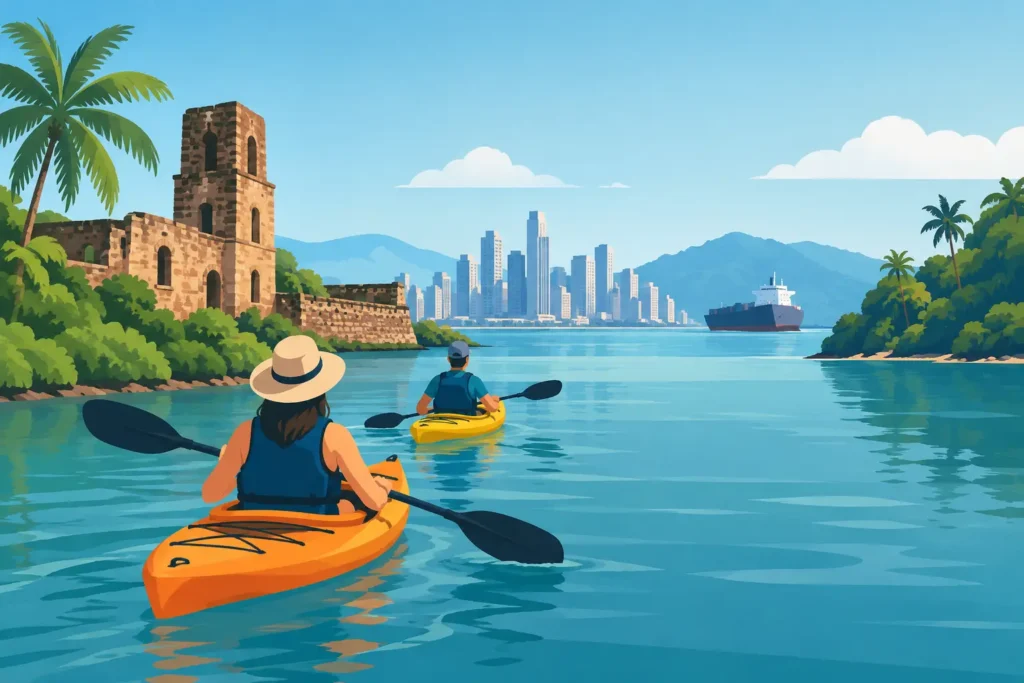
Panama City offers everything from airport hotels to boutique properties in lively neighborhoods. The right choice depends on your arrival time and your expedition meeting instructions. A late evening arrival may call for an airport-adjacent hotel. If you have a full day before the trip, staying in the city can be more enjoyable and gives you a chance to visit the Panama Canal, walk the historic district, or enjoy a good meal before heading into island country.
What matters most is confirming the pickup location and time provided in your trip materials. Do not assume every hotel is equally convenient for an early group departure. A well-organized expedition operator will provide clear instructions, but it is your job to be packed, reachable, and ready when the vehicle arrives.
Build Realistic Arrival and Departure Buffers
A remote paddling trip deserves a more conservative travel plan than a city break. Booking the cheapest or tightest itinerary can create expensive stress if one delay puts the entire expedition at risk.
For your arrival, plan to be in Panama City the day before the expedition starts. If you are traveling during hurricane season elsewhere in the Caribbean, winter weather in North America, or a period when airline schedules are especially tight, consider arriving two nights early. The extra night is a small investment in protecting a much bigger adventure.
Your return connection deserves the same care. Do not book an international departure that leaves shortly after the expedition is scheduled to end. Road conditions, weather, boat timing, and the realities of traveling out of a remote coastal region can affect the final day. A night in Panama City after the trip is the safer choice, especially for travelers flying long distances or returning to work on a fixed schedule.
There is a trade-off, of course. Extra hotel nights add cost and time. But they also turn a fragile itinerary into a resilient one. For an active vacation with a fixed departure date, resilience is worth far more than shaving a few hours off the schedule.
Understand What San Blas Transportation Requires
The journey into Guna Yala typically involves an overland transfer from Panama City toward the Caribbean coast, followed by boat travel to the islands. The drive can include winding, steep roads, and the final approach may feel more like an expedition transfer than a standard tourist shuttle.
Pack accordingly. Keep essential items – passport, medications, a change of clothes, sun protection, and valuables – readily accessible rather than buried at the bottom of a large suitcase. If you are prone to motion sickness, speak with your physician before travel and bring the remedies that work for you. Road and boat movement are part of reaching a place that remains beautifully removed from mass tourism.
Luggage limits can also be more restrictive than on a conventional vacation. Kayaking expeditions require compact, practical packing because gear must move efficiently between vehicles, boats, camps, lodges, and dry bags. Your operator’s packing list should be the final word. Bringing oversized hard-sided luggage may be possible for some itinerary segments, but it is rarely the most convenient choice.
Keep your first-day gear separate
The gear you need immediately should not depend on finding a particular duffel after a transfer. Wear or carry travel clothes suited to tropical heat, and keep a small day bag with water, sunscreen, sunglasses, rain protection, toiletries, and any required medication.
For kayaking, quick-drying layers, secure water shoes, and a reliable sun shirt do more work than a large wardrobe. Remote island travel rewards travelers who pack light, protect their essentials, and are comfortable repeating a few proven pieces of clothing.
Coordinate Flights Before You Confirm Them
Before purchasing airfare, compare your preferred flight times with the expedition’s stated start and finish windows. This is especially important when booking with airline points or choosing a discounted fare that may have limited flexibility.
If you need to coordinate separately from your travel companion, share your full flight details early. It is much easier to identify a risky connection weeks before departure than it is to solve one from an airport lounge. Travelers arriving from different cities should generally plan to meet in Panama City rather than attempt to synchronize at a remote transfer point.
A few details are worth confirming before you fly:
- The exact hotel or meeting location for the first morning
- The required ready time, not just the scheduled departure time
- Whether checked luggage has any size or weight restrictions
- What documents are needed for entry to Panama and access to Guna Yala
- The recommended timing for onward international flights after the expedition
These are not glamorous details, but they protect the glamorous part: launching a kayak into clear Caribbean water with the logistics already handled.
Respect the Guna Yala Context
San Blas is more than a scenic archipelago. It is the homeland of the Guna people, who govern Guna Yala with a strong cultural identity and their own community-based systems. Visitors are guests in this region, not simply consumers of a tropical backdrop.
That means following local guidance on photography, purchases, village visits, and access to specific areas. Ask before photographing people, homes, or community spaces. Bring small bills for personal purchases if advised, especially if you hope to buy hand-sewn mola art directly from Guna makers. Respectful curiosity goes a long way, while assumptions do not.
The same principle applies to your environmental footprint. Fresh water, waste disposal, and supply deliveries can be more complex on remote islands than in mainland hotels. Use refillable containers where possible, follow your guide’s waste procedures, and leave shells, coral, and wildlife where they belong. A well-run expedition is designed to minimize impact, but every guest contributes to that outcome.
Let the Guides Handle the Moving Parts
A guided San Blas kayaking trip is not only about having someone lead the way on the water. It is about putting local knowledge behind every transition: pickup timing, boats, weather calls, paddling routes, safety systems, meals, camps or lodges, and community protocols.
At Sea Kayaking Costa Rica, that support is central to the expedition experience. You still get the satisfaction of traveling beyond the standard tourist route, but you do not have to independently manage every remote-island variable. Experienced guides can adapt plans when conditions demand it, while keeping the group focused on what matters: strong paddling, wildlife, reef time, and the rare feeling of being properly away from the everyday.
This does not mean conditions are scripted. Wind may change a crossing, rain may arrive quickly, and a beach landing may be more rugged than the photographs suggest. That is part of the appeal. The right mindset is prepared, flexible, and ready to participate – not passive, and not attached to a minute-by-minute itinerary.
A Better Way to Think About Connections
The best San Blas connections are not the fastest ones. They are the ones with enough margin to absorb reality: an airline delay, a tropical downpour, a slow baggage carousel, or the simple need for a good night’s sleep before launching into a demanding and rewarding week outdoors.
Give yourself that margin, travel with the gear you truly need, and arrive ready to meet the islands on their terms. The payoff is a journey that begins calmly in Panama City and quickly opens into a horizon of palm-fringed islands, clear water, and paddling days you will carry home long after the flight connection is forgotten.