

8 Best Wildlife Paddling Destinations to Go Wild
October 7, 2026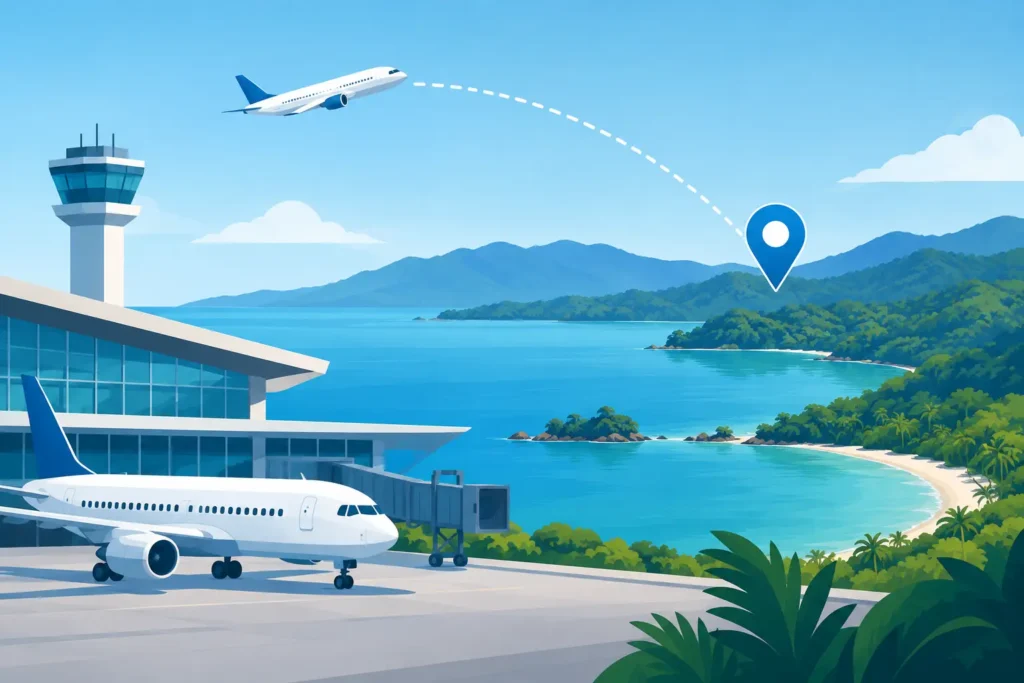
The short answer to which airport serves Golfo Dulce is Puerto Jimenez Airport (PJM). For most travelers headed to a sea kayaking expedition on Costa Rica’s wild southern Pacific coast, it is the smartest and most direct arrival point. A short domestic flight from San Jose replaces a long overland journey with a dramatic approach over rainforest ridges, mangrove-lined waterways, and the deep blue sweep of the gulf.
But Golfo Dulce is a large, remote body of water with more than one possible access point. Your best airport depends on where your trip begins, where it ends, and whether you are joining a guided expedition or building extra time into your own Costa Rica itinerary. Getting this piece right makes the difference between an easy first day and a complicated transfer across the Osa Peninsula.
Which Airport Serves Golfo Dulce Best?
Puerto Jimenez Airport (PJM) is the primary gateway for the eastern and southern shores of Golfo Dulce, including the Osa Peninsula. It is the airport most commonly used for lodge-to-lodge sea kayaking trips, Corcovado-area travel, and expeditions launching from the Puerto Jimenez region.
Puerto Jimenez is a small domestic airport, not an international hub. Travelers typically fly into Juan Santamaria International Airport (SJO) near San Jose, then connect to Puerto Jimenez on a domestic flight. Flight schedules can change with season, weather, and airline operations, so this connection deserves careful planning, especially when you arrive in Costa Rica on an afternoon or evening international flight.
For a Golfo Dulce paddling adventure, PJM puts you close to the action. Instead of spending much of your vacation in a vehicle, you can reach the coastal launch area quickly and begin looking for scarlet macaws, dolphins, and rainforest wildlife almost immediately.
Why Puerto Jimenez is the preferred choice
Golfo Dulce is one of Costa Rica’s most biologically rich paddling destinations, but its remoteness is part of the appeal. Roads into the Osa are slower and more variable than many first-time visitors expect. Flying to Puerto Jimenez gives active travelers more time on the water and less time navigating logistical hurdles.
It also works particularly well for guided multi-day itineraries. An experienced operator can coordinate airport pickups, transfer timing, gear preparation, and the first night’s lodging around a defined arrival window. That support matters in a region where changing conditions, limited transport options, and small-town schedules are all part of the landscape.
For Sea Kayaking Costa Rica’s 8-day Golfo Dulce expedition, Puerto Jimenez is the natural gateway because it connects guests efficiently to the expedition route while keeping the focus on what they came for: remote beaches, warm-water paddling, snorkeling, rainforest, and the powerful quiet of the gulf.
Golfito Airport Is a Useful Alternative
Golfito Airport (GLF) also serves the Golfo Dulce region. It sits on the northern side of the gulf, near the town of Golfito and the larger road network that connects southern Costa Rica with the Panamanian border region.
Golfito can be the right choice if your lodging, activity, or departure point is on the northwestern or northern shore of Golfo Dulce. It may also make sense for travelers combining the gulf with destinations such as Pavones, the southern Pacific coast, or cross-border plans involving Panama.
For most Osa Peninsula kayaking itineraries, however, Golfito is less convenient than Puerto Jimenez. You may need a boat crossing, a lengthy road transfer, or both to reach your actual starting point. The route can be scenic and worthwhile if it fits the trip design, but it is not usually the simplest airport for an expedition centered on the eastern side of the gulf.
Think of it this way: Puerto Jimenez is generally the better airport for getting into the Osa and onto a kayak trip. Golfito is a credible regional option when your route is based on the opposite side of Golfo Dulce.
San Jose Is Your International Starting Point
International visitors from the United States and Canada will usually arrive at Juan Santamaria International Airport (SJO) near San Jose. This is Costa Rica’s principal international airport and the place where most Golfo Dulce travel plans begin.
From SJO, you have two realistic ways to continue south: a domestic flight to Puerto Jimenez or Golfito, or a private ground transfer and/or rental vehicle. Flying is usually the best use of time for a week-long active vacation. The drive to Puerto Jimenez is long, often taking six to eight hours or more depending on traffic, road conditions, stops, and the exact route.
Driving can work for travelers who want a road trip and have several extra days. It offers flexibility for stopping along the coast or staying overnight near Uvita, Dominical, or the Osa’s northern gateway. It is a poorer fit for travelers arriving on a tight schedule, carrying expedition gear, or hoping to maximize time paddling rather than sitting in transit.
Should you connect on the same day?
Sometimes, yes. Often, no. It depends entirely on the timing of your international arrival and the domestic flight schedule available on your travel date.
A same-day connection can be sensible when your international flight lands early, you have plenty of buffer, and your domestic flight is scheduled later in the day. But Costa Rica’s weather, airline timing, baggage collection, immigration, and the need to transfer between terminals can all create pressure. A missed domestic flight may mean losing a night in Puerto Jimenez or having to reorganize your transfer plan.
For a premium guided adventure, arriving in San Jose one night before the domestic connection is often the calmer choice. You start the expedition rested, protect your first day from international travel disruptions, and give delayed luggage a chance to catch up if needed. This is especially valuable during the wetter months, when afternoon rain can affect flight operations in the south.
Plan Your Airport Around the Expedition, Not the Map
A map can make Golfo Dulce look compact. On the ground and on the water, it is a different story. The gulf reaches deep into southern Costa Rica, bordered by dense forest, isolated coves, and communities where transportation operates on a smaller scale. The nearest airport is not always the best airport.
Before booking flights, confirm four practical details with your tour operator: the required arrival airport, the latest acceptable arrival time, the meeting location, and the recommended departure window at the end of the trip. Those answers should guide every flight decision.
This matters even more for multi-day kayaking. Your group may begin from a specific beach, travel one direction through the gulf, and finish somewhere different. A well-designed expedition handles that complexity behind the scenes, but guests still need to arrive at the correct gateway with enough time for the team to organize transfers safely.
Do not book a return flight from San Jose that leaves shortly after a scheduled domestic arrival from Puerto Jimenez. Domestic flights can be efficient, but this is not the place to gamble with a narrow connection. An overnight near SJO after your expedition can turn the final day from a race into a relaxed finish.
What to Expect at Puerto Jimenez Airport
Puerto Jimenez Airport is small, practical, and refreshingly uncomplicated. There are no sprawling terminals, endless retail corridors, or big-city airport distractions. You arrive close to town, collect your bags, and meet your driver or guide.
That simplicity is part of the charm, but it also calls for realistic expectations. Amenities are limited, checked baggage allowances on domestic flights can be stricter than on international routes, and oversized equipment needs to be discussed in advance. Most guided kayaking companies provide the boats and core paddling gear, so guests generally do not need to travel with bulky expedition equipment.
Pack essential medication, travel documents, a change of clothes, and any immediate personal items in your carry-on. If a checked bag follows on a later flight, you will still be prepared for your first night in the tropics.
The Best Arrival Strategy for Golfo Dulce
For the majority of travelers, the strongest plan is simple: fly internationally into San Jose, spend the night if your schedule requires it, then take a domestic flight to Puerto Jimenez. Arrange a confirmed transfer from PJM to your first lodge, hotel, or expedition meeting point.
Choose Golfito instead only when your specific itinerary is based on the northern side of the gulf or your operator explicitly directs you there. Choose the overland route from San Jose when you have extra time and genuinely want the journey to be part of the adventure.
Golfo Dulce rewards travelers who arrive prepared but leave room for the place itself. Book the airport that matches your route, give yourself a little time buffer, and let the first view of that rainforest-framed water signal that the expedition has already begun.