
Is Sea Kayaking in Costa Rica Safe for You?
July 14, 2026
Best Time for Kayaking in Tortuguero, Costa Rica
July 16, 2026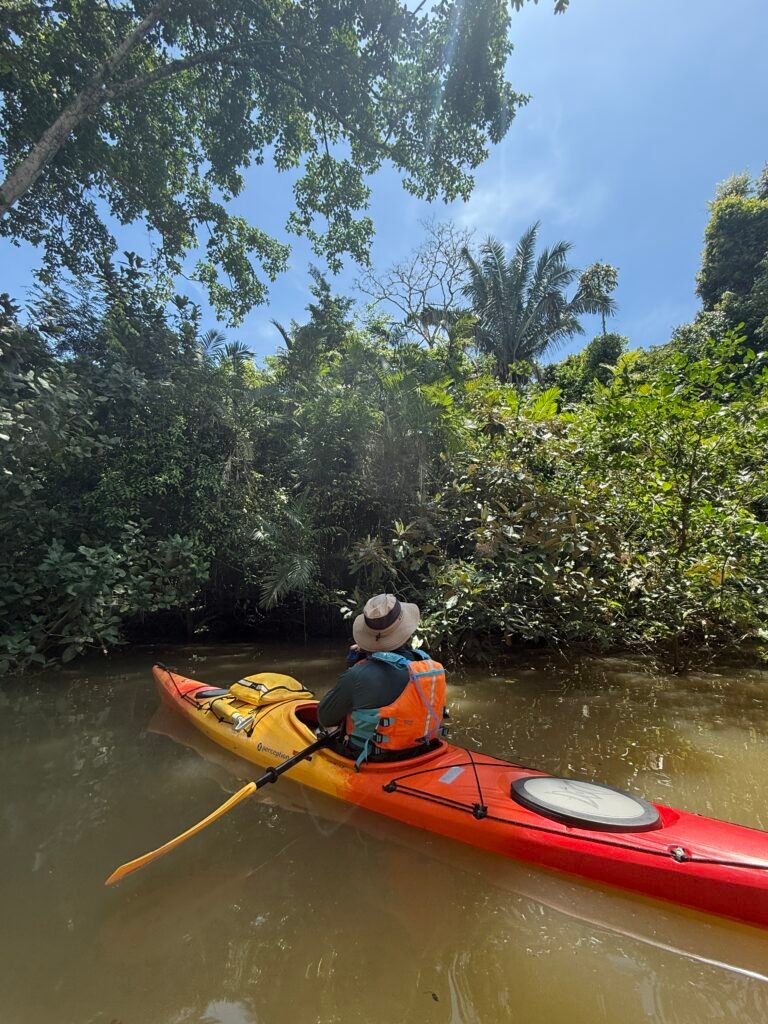
A Costa Rican kayak expedition can move from glassy morning water to a hard tropical downpour before lunch. You may paddle beside rainforest, land on a remote beach, snorkel over reef, and watch scarlet macaws cross the shoreline – all in one day. Knowing what to pack for a kayaking trip in Costa Rica means preparing for that range without bringing a suitcase full of gear you will never use.
On a guided multi-day trip, your operator typically supplies the boats, paddles, personal flotation devices, safety equipment, and expedition-specific gear. Your job is to arrive with personal clothing and essentials that work in heat, humidity, saltwater, rain, and relaxed lodge or camp evenings. Pack light, pack deliberately, and protect anything that cannot get wet.
Start With the Reality of Tropical Paddling
Costa Rica is warm year-round, but tropical does not mean one-note weather. The Pacific’s Golfo Dulce can bring intense sun, humid air, and sudden showers. Tortuguero is wetter, with frequent rain and a network of calm waterways shaded by dense rainforest. Coastal conditions can also change with wind, tides, and exposure.
The right kit is built around quick drying, sun protection, and waterproof organization. Cotton is the wrong foundation for most paddling days because it stays damp, gets heavy, and can feel clammy. Choose lightweight synthetic or merino fabrics that dry quickly and can be worn more than once.
There is a trade-off: bringing extra outfits feels appealing before departure, but bulky luggage becomes a nuisance in small boats, vehicles, and remote lodges. A compact, capable wardrobe is more useful than a large one.
What to Pack for a Kayaking Trip in Costa Rica: Clothing
Plan for active days on the water and casual, comfortable time ashore. You do not need technical expedition clothing from head to toe, but a few high-performing pieces make a major difference.
For paddling, bring two or three quick-dry shirts with long sleeves. Sun hoodies or lightweight UPF shirts are excellent because they reduce the amount of sunscreen you need to reapply across your shoulders, arms, and back. Add one or two pairs of quick-dry shorts or lightweight paddling pants. Pants can be especially welcome in mosquito-prone areas or on cooler, rainy mornings.
A wide-brimmed hat or billed cap with a neck cover is one of the hardest-working items in your bag. The tropical sun reflects off the water, and a hat protects you even when you are focused on your paddle stroke, a breaching fish, or a troop of monkeys in the trees. Bring polarized sunglasses with a secure retainer. Without a strap, sunglasses have a remarkable ability to disappear into the water.
For evenings, pack one lightweight long-sleeve layer, a pair of comfortable long pants, and a casual shirt or two. Even warm destinations can feel cooler after a rainstorm or during a boat transfer at dawn. A light rain jacket is worth its small footprint, particularly for Tortuguero or travel during the greener, wetter months.
Underwear and socks should be synthetic or merino. Bring enough for the trip length if you prefer, but many travelers find that a small amount of sink-washable clothing works well. If your itinerary includes lodges, ask ahead about laundry options rather than assuming they will be available every night.
Footwear That Works on Water and Shore
Your feet will get wet. That is normal, and it is part of the experience. Bring secure water shoes, river sandals with heel straps, or lightweight amphibious shoes for paddling and beach landings. They should stay on your feet in moving water and protect your soles from shells, rocks, roots, and hot sand.
Avoid flip-flops as your primary paddling footwear. They are fine for showers or relaxing at the lodge, but they slip, offer little protection, and are easily lost during a landing. A second pair of lightweight walking shoes or trail sandals is useful for transfers, village walks, and travel days. Heavy hiking boots are usually unnecessary unless your specific itinerary includes substantial hiking.
Keep Critical Items Dry
A dry bag is not an accessory on a sea kayaking trip. It is mission-critical. Even on calm water, spray, rain, wet hands, and beach landings are part of the day. Use a reliable dry bag for spare clothing and a smaller waterproof pouch for items you may need quickly.
Your day-on-the-water essentials should include the following:
- A waterproof phone case or small dry pouch, ideally with a tether
- Sunscreen rated SPF 30 or higher, preferably reef-conscious and water resistant
- Lip balm with SPF and insect repellent
- A reusable water bottle or hydration system
- A small personal first-aid kit with prescription medications
- A packable rain layer and a dry spare shirt
Keep electronics, passports, travel documents, and medications in separate waterproof layers. A dry bag can fail if it is not rolled and clipped correctly, so double protection is smart for anything truly irreplaceable. Put your passport and primary travel documents in luggage or secure lodge storage during paddling days unless your guides advise otherwise.
Sun, Bugs, and Skin Care Matter More Than You Think
The biggest comfort mistake on a tropical expedition is underestimating sun exposure. UV intensity near the equator can be serious even under cloud cover. Apply sunscreen before launching, then reapply according to the product directions, especially after swimming or sweating. Focus on the backs of your hands, ears, feet, calves, and the underside of your chin, where reflected light catches people by surprise.
Insect pressure varies by destination, season, and time of day. Mosquitoes are more likely to be noticeable around still water and at dawn or dusk, particularly in rainforest environments. Bring a personal insect repellent you know your skin tolerates. Lightweight long sleeves and pants provide useful non-chemical coverage when the bugs are active.
Saltwater, humidity, and frequent rinsing can also irritate skin. A small tube of anti-chafe balm, soothing after-sun lotion, and blister treatment can earn a permanent place in your travel kit. If you wear contact lenses, pack backup glasses and extra lenses in a waterproof case.
Bring the Right Personal Health Essentials
Guided expeditions carry safety equipment and leaders trained to manage the environment, but personal medical needs remain personal. Carry all prescription medications in their original containers, plus extra days’ supply in case travel is delayed. Keep them in your carry-on during flights, not in checked luggage.
If you are prone to motion sickness, speak with your physician before the trip and bring a remedy that works for you. Sea kayaking is generally more stable and active than sitting in a large boat, but transfers by motorboat and changing coastal conditions can affect some travelers. Do not test a new medication for the first time on expedition.
A few travelers also benefit from electrolyte packets, particularly when adjusting to heat and sweating heavily. They are light, easy to pack, and useful after a long paddle or a day of travel. Your guides will set the pace and support hydration, but arriving well hydrated is still your responsibility.
Camera Gear: Pack for the Moments You Cannot Stage
Costa Rica rewards patience. A green iguana on a branch, a dolphin surfacing beside your kayak, a scarlet macaw overhead, or an ember-colored sunset can happen fast. A phone in a waterproof case is enough for many guests, especially if you want to stay present while paddling.
If photography is a priority, bring only the camera gear you can protect and manage confidently. A compact camera or small mirrorless setup in a true waterproof case is more practical than a large kit that needs constant attention. Carry a microfiber cloth, spare battery, and memory card in a sealed pouch. Binoculars can also be worthwhile for wildlife-focused routes, but choose compact, water-resistant models with a strap.
Remember that the best wildlife encounters are not guaranteed on cue. Keep cameras ready, but do not let a viewfinder become the whole trip.
What Not to Bring on a Costa Rica Kayak Expedition
Leave expensive jewelry, oversized hard-shell luggage, and fragile valuables at home whenever possible. You will not need formal clothing, multiple pairs of heavy shoes, or a full-size hair dryer. Large bath towels are also unnecessary when your accommodation provides them, and they take up valuable space when they are damp.
Avoid bringing a brand-new pair of water shoes, a new dry bag, or untested sun-protection clothing without trying them first. A short paddle or a walk around home can reveal rubbing straps, poor fit, or fabric that stays wet far too long. Expedition comfort often comes down to small details that are easy to solve before departure.
Match Your Packing List to Your Itinerary
A lodge-to-lodge Golfo Dulce expedition and a wildlife-rich Tortuguero journey share the same tropical fundamentals, but their emphasis differs. Golfo Dulce travelers may want more snorkel-ready gear, while Tortuguero guests often place extra value on rain protection, long sleeves, and binoculars. A Panama trip through San Blas can call for clothing that feels respectful and comfortable during cultural visits, alongside serious sun protection for open-water days.
Sea Kayaking Costa Rica provides detailed pre-departure information for each guided route, and that trip-specific guidance should always take priority over a generic packing checklist. Water conditions, lodging style, planned activities, and seasonal weather all shape the final few items you bring.
Pack for movement, not perfection. The right bag lets you step into your kayak ready for rain, wildlife, saltwater, and the kind of remote coastal day that stays with you long after your gear is dry.