
Ecolodge Versus Beach Resort for Active Travelers
November 14, 2026
Costa Rica Rainforest and Ocean Tour Guide
November 18, 2026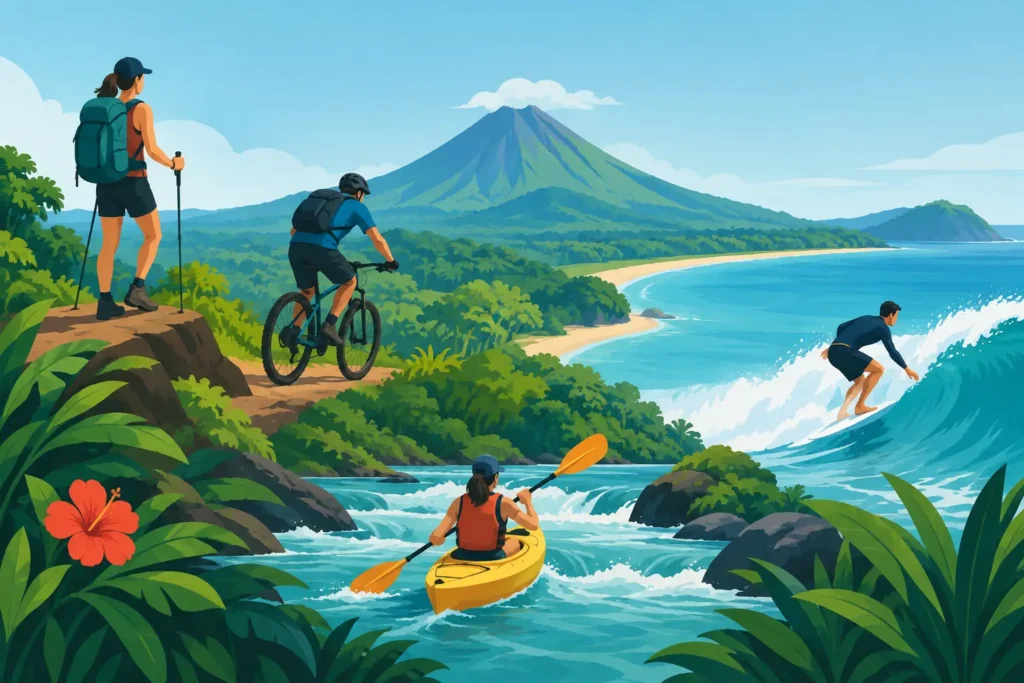
The best Costa Rica multi sport tours are not measured by how many activities can be squeezed into one week. They are measured by how fully they bring you into the country: paddling a quiet gulf before breakfast, spotting scarlet macaws overhead, snorkeling clear tropical water, hiking beneath rainforest canopy, and ending the day somewhere that feels far removed from a resort corridor.
For active travelers, Costa Rica makes a strong case for doing more than one thing. The country is compact, but its terrain is demanding and its ecosystems change quickly. A good trip connects those environments with a smart route, skilled guides, dependable equipment, and enough breathing room to actually experience the places between activities. The goal is not to race from zip line to waterfall. It is to travel with purpose and return home with stories that go beyond the usual highlights.
What Makes the Best Costa Rica Multi Sport Tours?
A true multi-sport itinerary combines compatible activities in a single landscape. On Costa Rica’s wild Pacific coast, that might mean sea kayaking, snorkeling, short rainforest walks, swimming, and wildlife observation. Near inland rivers, rafting and hiking may be a natural pairing. The strongest trips do not add activities simply to fill a brochure. Each day should build on the location, weather, and rhythm of the expedition.
The route matters as much as the activity list. Costa Rica’s busiest destinations can be exciting, but they often involve long transfer days, crowded launch points, and limited time away from developed areas. Remote regions require more planning, yet they reward travelers with calmer water, quieter trails, richer wildlife viewing, and a more meaningful sense of place.
For that reason, assess an itinerary by asking where you will spend your time, not just what is printed in bold type. A trip that includes three hours of guided paddling in a biologically rich gulf can deliver more than a long drive between a brief hike, a rushed attraction, and a crowded hotel pool.
The Activity Mix Should Have a Purpose
The right activity mix depends on how you want to feel at the end of the day. Some travelers want a high-output challenge with long paddling days, steep hikes, and technical whitewater. Others want steady, rewarding movement balanced with time to snorkel, photograph wildlife, or relax at an ecolodge. Neither approach is better, but the difference should be clear before you book.
Sea kayaking works particularly well in a Costa Rica multi-sport trip because it is both transportation and activity. Rather than viewing the coast from a roadside lookout, you move through it at water level. You may pass mangrove shorelines, secluded beaches, rocky headlands, and rainforest-covered slopes while carrying only what the day requires. Add snorkeling and guided natural history, and the experience becomes far more than a paddle.
Look for realistic descriptions of daily distances, elevation, water conditions, and transfer times. “Active” can mean very different things to different operators. A professionally run trip will explain what is expected physically, how beginners are supported, and when conditions may require an adjusted plan.
Choose a Region That Matches Your Travel Style
Costa Rica is not one uniform adventure destination. Selecting the right region is often the most important decision you will make.
Golfo Dulce for Remote Pacific Paddling
Golfo Dulce, on Costa Rica’s southern Pacific coast, is a standout choice for travelers who want wild coastline, warm water, and a deep rainforest setting. Its protected waters are well suited to sea kayaking, while nearby beaches and reefs create opportunities for swimming and snorkeling. The region is also known for exceptional birdlife and frequent wildlife encounters, from monkeys in the trees to dolphins offshore.
An eight-day lodge-to-lodge expedition in Golfo Dulce gives the journey a satisfying progression. You are not returning to the same base after every outing. Instead, each paddle advances the route, with thoughtfully chosen lodges providing a comfortable place to recover, eat well, and prepare for the next day. This format suits travelers who want the expedition feel without committing to camping every night.
Tortuguero for Wildlife-First Exploration
Tortuguero is a different kind of multi-sport setting. This Caribbean lowland region is defined by canals, wetlands, beaches, and dense forest. Kayaking here is quieter and more observational than open-coast paddling. You move through waterways where the experience is shaped by bird calls, shifting light, and the possibility of seeing monkeys, caimans, sloths, and other rainforest wildlife.
A wildlife-focused journey in Tortuguero is a strong fit if your priority is immersion rather than distance or speed. It is ideal for travelers who appreciate active days but want the natural world to remain the central event. The best guides help you read the landscape, understand seasonal patterns, and notice the details that are easy to miss from a motorboat.
Inland Adventure Hubs for Bigger Adrenaline
If rafting, canyoning, and longer hikes are at the top of your list, inland adventure hubs may be the better match. These areas can offer high-energy days and easy access to multiple land-based activities. The trade-off is that they are often more developed and less expedition-oriented than remote coastal routes.
This style works well for travelers who have limited time and want variety with hotel comfort each night. It may be less satisfying for those seeking quiet water, small groups, and an unhurried relationship with the landscape. Be honest about which version of adventure you want before choosing an itinerary.
Why Guides and Logistics Matter More in Remote Costa Rica
Costa Rica is welcoming and accessible, but a multi-sport trip still has moving parts. Weather can shift quickly. Roads can be slow. Tide, wind, river level, and wildlife conditions affect what is practical on any given day. That is where destination-specific expertise makes a real difference.
A quality outfitter plans beyond the headline activities. Guides monitor conditions, set an appropriate pace, manage group spacing on the water, and know when to alter a route. They also handle the details that can drain energy from an independent trip: airport coordination, gear fitting, meals, luggage transfers, boat support where needed, and accommodations in places that would be difficult to organize on your own.
Small groups are especially valuable for kayaking and wildlife travel. They make it easier for guides to coach paddlers individually, keep the group together, and pause when something remarkable appears on shore. They also reduce the feeling that you are moving through a wild place as part of a crowd.
At Sea Kayaking Costa Rica, the expedition model is built around this kind of careful planning: experienced guides, quality equipment, small groups, and routes selected for genuine immersion rather than convenience alone.
Match the Trip to Your Experience Level
You do not need to be an elite athlete to enjoy an active Costa Rica vacation. You do need to choose accurately. Beginners can thrive on guided sea kayaking trips when the route uses protected water, the pace is well managed, and instruction is part of the experience. Travelers with previous paddling experience may prefer longer days or more exposed coastal sections.
Before booking, consider the practical realities. Can you sit comfortably in a kayak for several hours with breaks? Are you comfortable getting in and out of a boat from a beach or dock? Do you enjoy being outside in heat and humidity? Are you looking forward to simple adventure accommodations, or do you need a higher level of comfort every night?
These questions are not barriers. They help match you with the trip that will feel challenging in the right way. The best expeditions leave you pleasantly tired, proud of what you did, and eager for tomorrow. They should not leave you overwhelmed by a pace or skill requirement that was unclear from the start.
Questions Worth Asking Before You Book
Ask an operator how much time is spent actively paddling, hiking, or rafting each day and how often the itinerary changes lodging. Ask what happens if wind, rain, or water conditions change the plan. Ask whether guides carry safety and communication equipment, how they support less experienced guests, and what group size they consider normal.
Also ask about the moments between activities. Are meals part of the local experience? Will there be time to swim, watch for wildlife, or simply sit on the beach after a paddle? A well-designed active vacation includes these pauses. They are often where the destination has time to sink in.
Finally, consider the season. Green season can bring dramatic skies, lush forest, and fewer visitors, while drier months may offer more predictable conditions in some regions. There is no universal best month for every activity or coastline. A specialized operator should help you choose dates based on the specific route, not a generic countrywide forecast.
The right Costa Rica adventure should feel bigger than a checklist. Choose a route that puts you close to the water, forest, and wildlife you came to see, then let experienced guides handle the complicated pieces. That is how an active week becomes a real expedition.