
A Panama Cultural Itinerary Example for Paddlers
October 23, 2026
Plan San Blas Connections Without Guesswork
October 27, 2026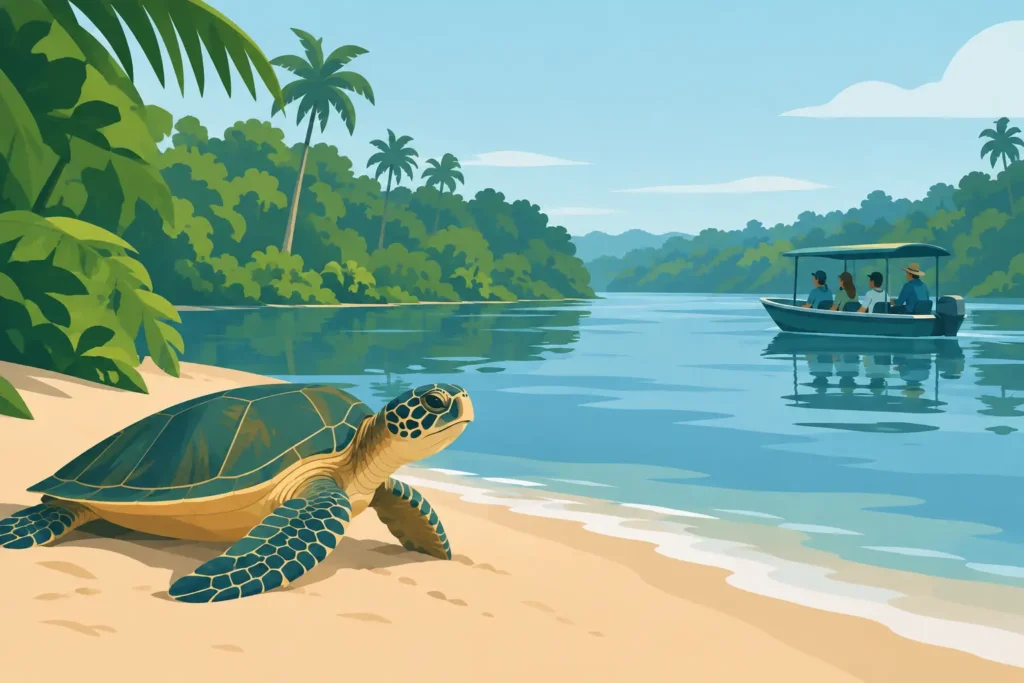
The first sound you may notice in Tortuguero is not a motor. It is a howler monkey carrying across the canal at dawn, followed by paddle blades slipping quietly through blackwater. A Tortuguero conservation travel example is not simply a trip where travelers happen to see turtles. It is a way of traveling that keeps the place – its nesting beaches, wetlands, wildlife, and local community – at the center of every decision.
For active travelers, that makes Tortuguero one of Costa Rica’s most compelling expedition destinations. There are no roads into the village. You arrive by boat or small aircraft, then move through a maze of rainforest canals where kayaks belong. The adventure is real, but so is the responsibility. What you do, where you stay, how you move, and who guides you all shape the footprint you leave behind.
What a Tortuguero Conservation Travel Example Looks Like
Picture a small guided kayaking group arriving at a waterfront ecolodge after a planned transfer from San José. Instead of rushing between crowded attractions, the group spends the next several days traveling under its own power through the canals, with an experienced local guide reading weather, water conditions, and wildlife behavior.
Mornings begin early, when birdlife is most active and the waterways are calm. Paddlers move in close formation along canal edges, watching for green iguanas, caimans, river turtles, herons, kingfishers, and monkeys in the canopy. The goal is observation, not pursuit. If an animal changes its behavior, the group creates distance. If a narrow channel is blocked by a branch or wildlife, the group turns around rather than forcing a passage.
That restraint is central to conservation travel. The best moments in Tortuguero are often quiet: a basilisk lizard sprinting over the surface, a three-toed sloth high in a cecropia tree, the flash of a blue morpho through the forest. They do not improve because a group gets closer. They improve because the group has the patience and local knowledge to be in the right place without disrupting what is already there.
A well-run itinerary also keeps logistics efficient. Shared transfers, small groups, locally based lodging, and guided water travel can reduce unnecessary vehicle use and spread visitor spending beyond large coastal resort areas. It is not a zero-impact trip – no travel is – but thoughtful trip design can make a meaningful difference.
Sea turtle encounters require the most care
Tortuguero is globally known for sea turtles, particularly during nesting and hatching periods. Exact activity varies by species, weather, moon cycles, and time of year. A responsible operator will never promise a turtle sighting, because wildlife does not work on a schedule.
When nesting activity is present, the standards should be clear. Travelers visit only under permitted, guided conditions. They follow beach-access rules, use no white lights or flash photography, keep voices low, and remain well behind the animal. A nesting turtle has made an extraordinary journey to reach the beach. The experience should be structured around giving her space to complete it.
For travelers, this can feel very different from a typical wildlife attraction. There is no crowding for the best photo, no touching, and no attempt to turn an animal into entertainment. In return, there is the rare privilege of witnessing a natural event on its own terms.
Why Kayaking Is a Better Fit for Tortuguero’s Canals
Motorboats are essential for some local transportation and long-distance transfers. They are also part of daily life in a remote water-based community. But for exploring smaller wildlife channels, sea kayaks offer a distinct advantage: they are quiet, maneuverable, and powered by the people sitting in them.
A kayak can enter shallow side channels that are unsuitable for larger boats and can pause without an engine idling nearby. That quieter approach often creates better wildlife viewing, especially during early morning paddles. It also changes the traveler’s experience. You are not watching the rainforest through a windshield. You are moving at rainforest speed, noticing the shift from open water to flooded forest and the small movements along the shore.
This does not mean kayaking is automatically low impact. A poorly managed group can still crowd wildlife, scrape banks, leave waste behind, or paddle in conditions beyond its ability. Professional leadership matters. Guides need to manage group spacing, weather changes, heat, hydration, boat traffic, and the varying confidence levels of every paddler.
That is why a guided expedition is often the right choice for travelers who want a remote experience without gambling on logistics or safety. Quality equipment, dry storage, fitted personal flotation devices, clear daily briefings, and conservative route decisions make it possible to focus on the adventure rather than the uncertainty.
Conservation Extends Beyond Wildlife
The most effective conservation travel also respects the people who live and work in Tortuguero. The village depends on water transport, hospitality, guiding, food service, and conservation-related employment. Choosing locally rooted services helps keep more of the economic value in the region.
Cultural respect is practical, not performative. Travelers should ask before photographing people, follow lodge and community guidelines, dress appropriately in the village, and remember that this is home to residents, not a themed stop on an itinerary. Buy thoughtfully, listen more than you speak, and let guides explain what makes the area work beyond its postcard wildlife.
Food choices matter, too. Lodges and local kitchens often face different supply realities than restaurants in Costa Rica’s larger cities. Meals may reflect what can be sourced and transported reliably. Flexibility is part of responsible travel in a remote destination, especially for guests with dietary needs. Share those needs early, bring reusable personal items where appropriate, and avoid creating avoidable waste.
How to Choose a Responsible Tortuguero Trip
The right trip is not necessarily the one with the longest wildlife checklist. Look for an operator that explains how it manages the places it visits. Their answers should be specific, not just broad claims about being green.
Before booking, ask how large the group will be, how guides handle wildlife encounters, what safety systems are in place, and where your money goes locally. Find out whether the itinerary includes non-motorized exploration, whether paddlers receive a proper orientation, and how the operator adjusts plans when rain, wind, or water conditions change.
Four details are especially revealing:
- Small group sizes that reduce noise and allow guides to manage wildlife distance.
- Experienced local guides who understand the canals, seasonal conditions, and community expectations.
- Clear turtle-viewing protocols that prioritize regulations and animal welfare over photographs.
- Well-organized equipment and contingency plans, because safety is part of responsible access.
Skill level also deserves an honest conversation. Tortuguero kayaking is accessible to many active beginners when the route, pace, and support are well planned. Still, tropical heat, humidity, rain, and several hours of paddling can be demanding. Travelers who arrive with a reasonable fitness base and a willingness to follow guide instruction will get more from the experience.
Sea Kayaking Costa Rica’s 7-day Tortuguero wildlife-focused journey is designed around this balance: active exploration, carefully managed logistics, and the kind of small-group access that makes the destination feel personal rather than packaged.
Travel With the Right Expectations
Tortuguero rewards travelers who can let nature set the pace. A heavy rainstorm may reshape the day. A turtle patrol may be canceled due to conditions or regulations. A planned canal route may change because water levels, boat traffic, or wildlife activity call for a better choice.
Those adjustments are not failures of an itinerary. They are evidence that the trip is being run with care. In a living rainforest, the most responsible plan is rarely the most rigid one.
Pack for repeated use, not single-use convenience. Bring a refillable water bottle, sun protection that will not become litter, lightweight rain gear, and dry bags for electronics and essentials. Keep snacks and wrappers secured. On the water, every loose item has the potential to become pollution.
The payoff for this approach is deeper than checking off a turtle encounter. You return with a clearer sense of how a rainforest canal functions, how a coastal community adapts to its setting, and why wild places need visitors who are willing to travel with humility. Choose a trip that leaves room for that kind of attention, and Tortuguero will give you an adventure worth carrying home.