

How to Vet Adventure Operators Before Booking
August 28, 2026
Costa Rica Ecolodges for Active Travelers
September 1, 2026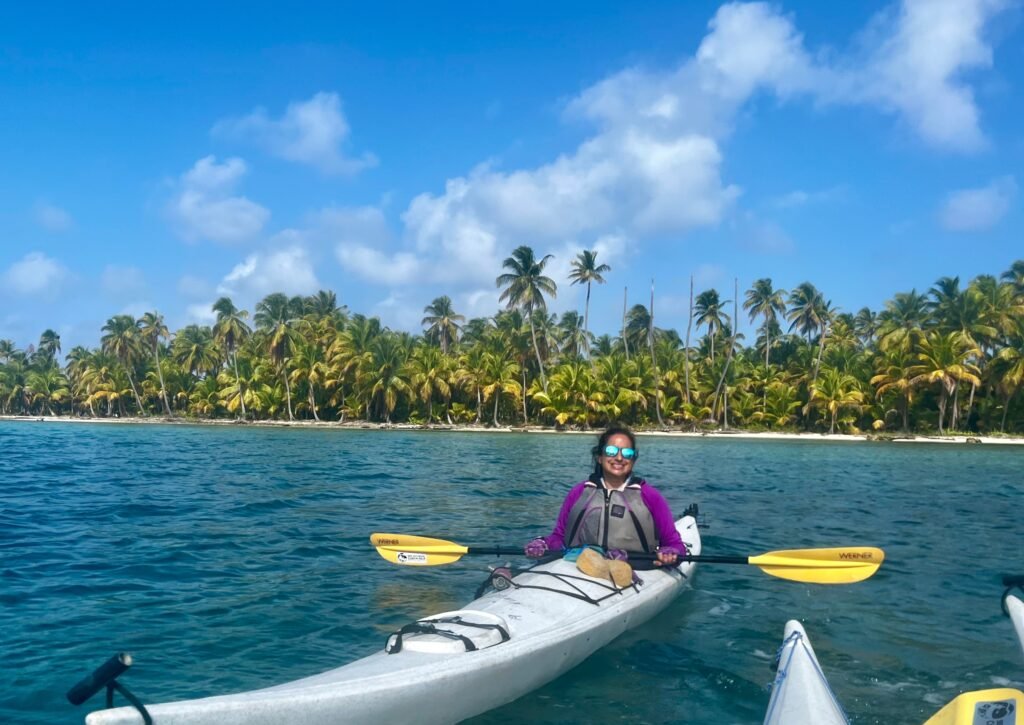
A Panama kayaking trip in the San Blas Islands is not a resort vacation with a paddleboard attached. It is a chance to travel under your own power through a Caribbean archipelago where small islands rise from clear water, reef fish flash beneath the hull, and Guna communities remain central to the character of the region.
For active travelers, that difference is the appeal. Days are shaped by wind, tides, weather, and the pace of the group rather than a crowded excursion schedule. You may paddle between palm-fringed islands, snorkel a reef before lunch, and fall asleep to the sound of water moving across a nearby beach. With the right route, guides, and preparation, it is an epic tropical expedition that remains welcoming to paddlers with limited sea-kayaking experience.
Why Panama Kayaking Belongs on an Active Traveler’s List
The San Blas Islands, in Panama’s Guna Yala region, offer a rare combination: warm Caribbean water, hundreds of low-lying islands, rich marine life, and a living cultural landscape. Some islands are inhabited, while others are little more than sand, palms, and a protected anchorage. The setting makes it possible to cover meaningful ground by kayak without needing to chase extreme mileage every day.
Unlike a single-day paddle near a developed beach town, a multi-day expedition gives the islands time to reveal themselves. Morning light can make shallow water look almost unreal. Afternoon trade winds may build enough texture on the water to make the paddle feel earned. Between crossings, there is room for swimming, snorkeling, beach walks, and conversations that do not happen on a rushed itinerary.
The destination also rewards travelers who want their adventure to carry more depth than a scenic backdrop. Guna Yala is an autonomous Indigenous territory, and visitors are guests in a place with its own customs, leadership, and community life. A well-run trip approaches cultural encounters with respect, works with local communities, and avoids treating people or villages as attractions.
What a San Blas Kayaking Expedition Feels Like
A typical day begins early, when conditions are often calmest. After breakfast, the group packs dry bags, reviews the route and conditions, and launches into warm Caribbean water. Depending on the itinerary, the morning may include an open-water crossing, reef-fringed paddling, or an easy island-to-island route with frequent breaks.
The rhythm is active but not punishing. Expedition kayaking is about moving efficiently, not racing. Your guides set the pace around the group’s ability, forecast, exposure, and the safest available route. On some days, that may mean a longer passage with a strong sense of accomplishment. On others, it may mean staying closer to sheltered islands and spending more time in the water with a mask and snorkel.
Afternoons are for the parts of travel that cannot be scheduled too tightly. You might snorkel over coral gardens, watch pelicans working the shoreline, or simply sit under a palm tree while your guides prepare camp or coordinate the next leg of the journey. Evenings tend to be simple and memorable: a shared meal, a sky full of stars, and the kind of quiet that is increasingly hard to find.
Expect Nature, Not a Script
The marine environment can be spectacular, but wildlife is never guaranteed. Sea turtles, rays, reef fish, seabirds, and dolphins are all possible sightings, yet the best mindset is curiosity rather than a checklist. Weather also shapes the experience. Bright sun, short tropical showers, wind, and changing sea state are part of kayaking in the Caribbean.
That variability is exactly why guided expertise matters. Professional guides read conditions continuously, select landing sites carefully, manage group spacing, and make conservative decisions when the forecast calls for it. A great itinerary has a plan, but it also has the flexibility to adapt.
Is Panama Kayaking Right for Your Skill Level?
You do not need to be an elite athlete to join a guided San Blas expedition. You do need to be comfortable being active for several consecutive days, spending time outdoors in heat and humidity, and following guide instruction on the water. A willingness to learn is more useful than previous mileage in a kayak.
Beginners can do very well when the trip is designed for mixed abilities and the outfitter provides stable sea kayaks, quality paddles, properly fitted personal flotation devices, and a thorough on-water orientation. Experienced paddlers, meanwhile, tend to appreciate the navigation, changing conditions, and the satisfaction of traveling through a remote island environment under their own power.
The trade-off is that tropical conditions can be more demanding than they look in photographs. Sun exposure is real, humidity can sap energy, and wind can turn a relaxed crossing into a focused paddle. If you have concerns about fitness, swimming ability, prior injuries, or comfort in open water, discuss them honestly before booking. The right operator will explain the trip’s demands clearly rather than oversell its ease.
The Details That Make a Remote Trip Work
In a destination as remote as San Blas, logistics are not background details. They are part of the expedition. Ground transfers, boat support where appropriate, food planning, drinking water, communication systems, emergency procedures, and local coordination all affect how much you can relax once the paddling begins.
This is where a premium guided trip earns its place. Rather than spending your vacation trying to source boats, decipher permits, pack the wrong gear, or solve transportation changes, you can focus on the experience. Sea Kayaking Costa Rica builds its Panama journeys around small groups, experienced guides, carefully managed support, and the local knowledge needed to move responsibly through Guna Yala.
Remote does not need to mean roughing it without support. Accommodations may range from simple island camping to locally run lodges, depending on the route. Expect comfort to be purposeful rather than resort-style: a dry place to sleep, satisfying meals, organized gear systems, and guides who know how to keep a camp running smoothly. That balance lets the destination stay wild without making the trip needlessly difficult.
What to Pack for the Caribbean
Your outfitter should provide a detailed gear list, but the essentials are straightforward. Bring sun-protective clothing, a wide-brim hat or cap, polarized sunglasses with a retainer, reef-safe sunscreen, lightweight layers for evenings, and footwear that handles wet landings. A reusable water bottle, personal medications, and a dry bag for your daily essentials are equally useful.
Leave oversized luggage and unnecessary valuables behind whenever possible. Life on an island expedition is easier with less. Quick-drying clothing earns its place, while cotton and bulky shoes usually do not. If snorkeling is important to you, ask whether masks and fins are supplied and whether you prefer to bring a personal mask for fit.
Travel insurance with emergency medical coverage and trip-interruption protection is a smart choice for any remote adventure. Flights, weather, road transfers, and regional operations can change. Preparation is not pessimism – it is what allows you to handle the unexpected without losing the spirit of the trip.
How to Be a Better Guest in Guna Yala
Respect is practical. Ask before photographing people, especially in villages. Follow guidance about where to land, walk, swim, and camp. Buy local crafts directly when appropriate, but do not bargain in a way that dismisses the work and skill behind them. Your guides can help explain local expectations and arrange encounters that are welcome rather than intrusive.
The same care applies to the water. Avoid standing on coral, keep your distance from wildlife, and use only the toiletries and sunscreen permitted by your trip’s environmental guidelines. Small choices matter in fragile island ecosystems where waste and water resources must be managed carefully.
A San Blas expedition is best for travelers who want more than a beach view. Come ready to paddle, stay flexible, listen to local expertise, and let the islands set the pace. That is how Panama’s Caribbean coast becomes more than a destination on a map – it becomes a journey you will still be talking about long after your gear has dried.

1 Comment
Great information shared.. really enjoyed reading this post thank you author for sharing this post .. appreciated