How Difficult Is Sea Kayaking for Beginners?
July 19, 2026
Can Beginners Do Expedition Kayaking Safely?
July 23, 2026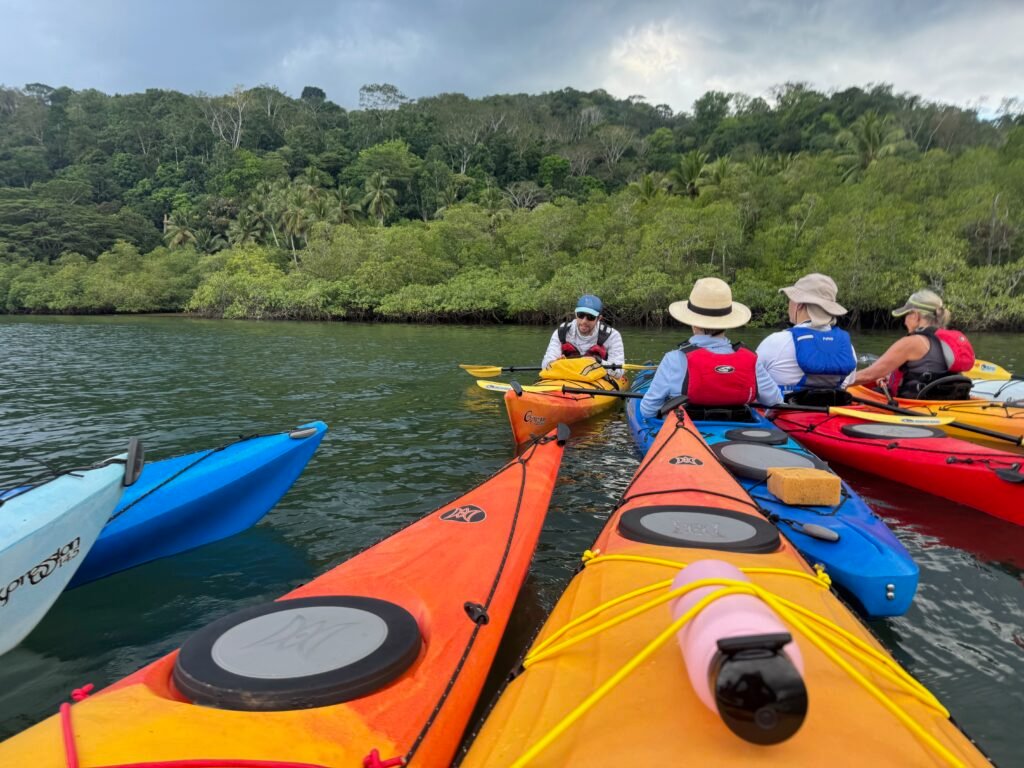
A first sea kayak trip should feel like an expedition, not an audition. The right guided kayaking trips for beginners put you in wild places you could not reach from the road, while experienced guides handle the route planning, weather decisions, equipment setup, and coaching that turn uncertainty into confidence.
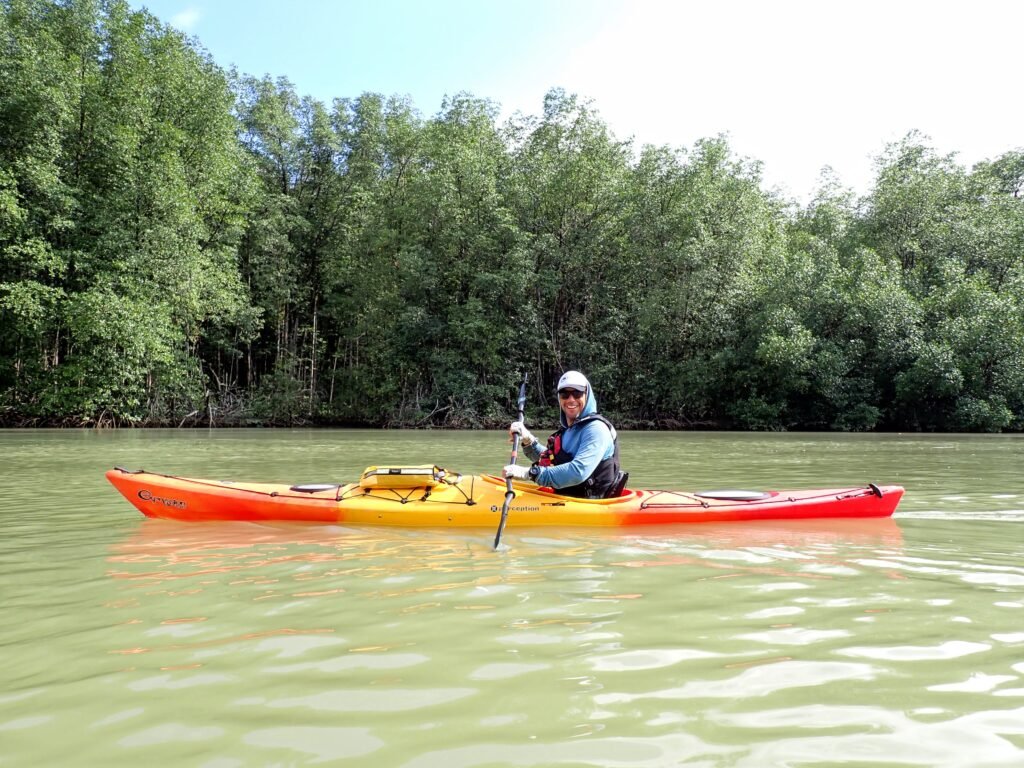
For active travelers, that can mean gliding beneath rainforest-covered slopes in Costa Rica’s Golfo Dulce, watching scarlet macaws cross the shoreline, or paddling quiet Caribbean canals where monkeys, caimans, and tropical birds appear between the mangroves. You do not need years of paddling experience to have that kind of day. You need a well-run trip, a realistic understanding of the conditions, and a willingness to learn.
What Makes a Kayaking Trip Beginner-Friendly?
Beginner-friendly does not mean watered down. It means the itinerary, equipment, instruction, and group management have been designed to give first-time or newer paddlers a genuine adventure with an appropriate margin of safety.
A quality outfitter starts with stable, properly fitted sea kayaks and provides the essentials: paddle, personal flotation device, dry bags, and safety equipment. Before launching, guides should cover efficient paddle strokes, turning, stopping, launching and landing, what to do if you capsize, and how the group will communicate on the water. That briefing is not a formality. It establishes the habits that make the rest of the journey more relaxed.
The best routes also match conditions to ability. Protected bays, sheltered gulfs, mangrove channels, and coastal islands with sensible landing options are generally better places to begin than exposed open-water crossings. Weather is still part of any tropical expedition, so flexibility matters. A professional guide team adjusts departure times, routes, and daily distances when wind, tide, rain, or sea state call for a more conservative plan.
Why a Guide Changes the Experience
A sea kayak is a remarkably direct way to travel. You move quietly, stay low to the water, and arrive at beaches and coves that larger boats pass by. Yet that freedom comes with decisions that are easy to underestimate: reading wind, managing current, choosing a landing, maintaining group spacing, and knowing when conditions are changing.
On a guided trip, those decisions are led by people who know the destination. Instead of studying charts from your hotel room or wondering whether a distant storm cloud matters, you can focus on paddling and paying attention to the world around you. Local knowledge also brings more depth to the journey. A guide may point out a three-toed sloth high in the canopy, identify tracks on a remote beach, or explain how a coastal community lives alongside the sea.
There is a practical advantage, too. Multi-day kayaking requires more than a boat. It involves transfers, meals, water, accommodations, luggage management, route permits where required, and a dependable plan for emergencies. On a professionally organized expedition, those details are coordinated before you arrive. Your energy goes toward the experience rather than logistics.
How Fit Do You Need to Be?
This is one of the most common questions from first-time expedition paddlers. The honest answer is that it depends on the trip. A relaxed half-day paddle and a multi-day lodge-to-lodge journey have different demands, even if both welcome beginners.
You do not need to be an elite athlete. You should, however, be comfortable being active for several hours, able to sit in a kayak for extended periods with breaks, and prepared to paddle at a steady, moderate pace. Previous experience with hiking, cycling, swimming, yoga, or regular gym workouts is helpful because it builds general endurance, balance, and mobility.
For an eight-day tropical expedition, prepare before departure. Take regular walks, add a few longer hikes or bike rides each week, and work on core strength and shoulder mobility. If possible, spend a day in a kayak near home. The goal is not to become an expert paddler before the trip. It is to arrive ready to learn without your body being surprised by consecutive active days.
Be candid about injuries, medical conditions, swimming ability, and concerns about balance or water confidence when you speak with an operator. A responsible company will tell you whether a particular route is a good fit. They may recommend a different departure, a shorter trip, or a private option. That advice protects your experience and the group as a whole.
Choosing the Right Guided Kayaking Trip for Beginners
Not every advertised beginner trip is identical. Look beyond the label and ask what the actual days involve. Daily paddling distance, exposure to wind and waves, boat type, group size, accommodation style, and guide-to-guest ratio all shape the experience.
Small groups are especially valuable for newer paddlers. Guides can offer more individual coaching, keep the pace cohesive, and respond quickly when someone needs a break or an adjustment to their foot pegs or paddle technique. Smaller groups also create a quieter wildlife experience and a more connected atmosphere at camp or the lodge after the day’s paddle.
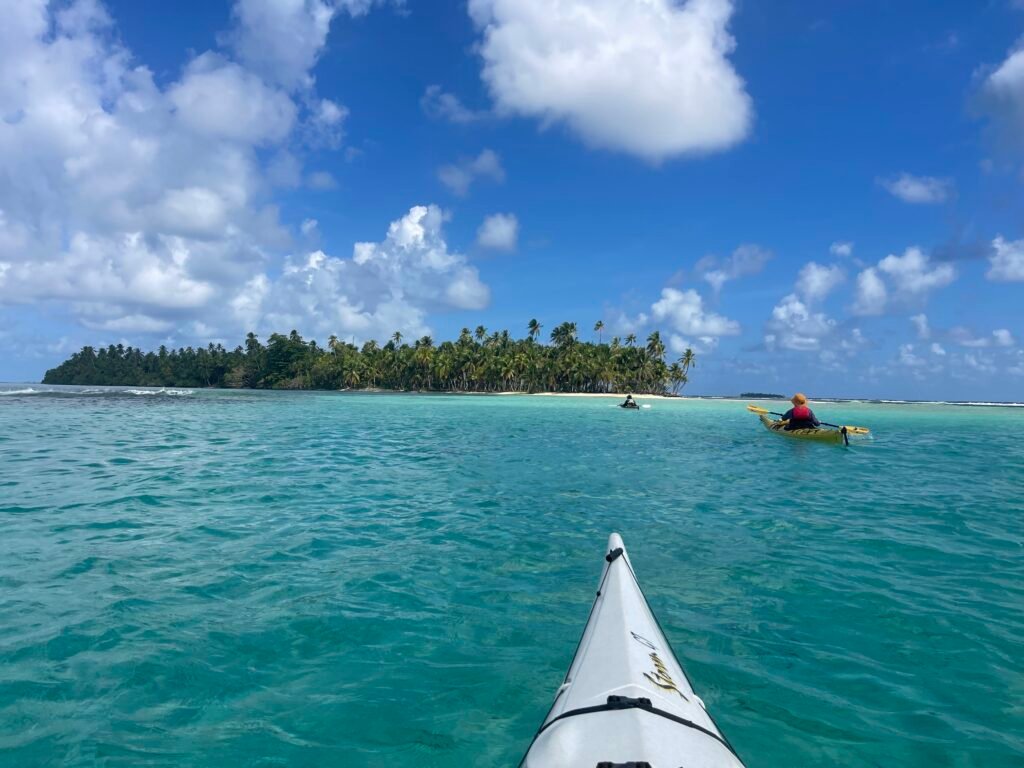
Consider what kind of adventure you want when you are off the water. Golfo Dulce appeals to travelers who want rainforest, Pacific coast scenery, secluded beaches, and lodge-to-lodge comfort. Tortuguero is a compelling choice for wildlife-focused travelers drawn to jungle canals and Caribbean coastal ecosystems. In Panama’s San Blas Islands, paddling can be paired with clear-water snorkeling and meaningful cultural encounters with Guna communities.
The accommodation question is worth considering carefully. Camping delivers a strong sense of remoteness and a memorable night beneath the tropical sky, but it involves more participation and less privacy. Ecolodges offer a comfortable place to recharge, often with a bed, shower, and meals waiting after a full day outdoors. Neither is automatically better. Choose the style that will help you enjoy the expedition rather than merely endure it.
What Your First Day Usually Looks Like
Most well-managed trips begin slowly and deliberately. After introductions, equipment fitting, and a safety talk, the group practices close to shore. You will learn how to hold the paddle, rotate through your torso rather than relying only on your arms, and use simple strokes to move forward, turn, stop, and reverse.
Expect the first hour to feel slightly awkward. That is normal. Sea kayaks respond differently than recreational boats, and the sensation of a narrow hull moving beneath you takes a little time to trust. Good guides do not rush that process. They watch how everyone is moving, offer clear corrections, and set a pace that allows the group to settle in.
By the end of the first day, most beginners are surprised by how quickly the basics click. Your shoulders relax, the boat tracks more easily, and you begin to notice the details beyond your paddle blades: pelicans diving offshore, a small beach ahead, the sound of rain moving across the water.
What to Pack and What to Leave Behind
Packing for a kayaking expedition is about staying dry, comfortable, and sun-protected without bringing unnecessary bulk. Clothing should be quick-drying and light. A long-sleeve sun shirt, swimwear, hat with a secure brim, sunglasses with a retaining strap, water shoes or secure sandals, and a lightweight rain layer cover most on-water needs.
Bring reef-safe sunscreen, insect repellent, a reusable water bottle, personal medications, and a dry change of clothes for the evening. A small headlamp is useful for camp-based trips. If you take photos, use a waterproof case or dry bag, and remember that electronics are never more important than keeping both hands available during a landing or launch.
Avoid cotton for paddling days. Once wet, it stays wet and can leave you chilled during rain or wind. Also avoid packing as if you are headed to a resort. On expedition travel, less gear means easier transfers, simpler organization, and fewer things to lose in a dry bag.
Safety Is Part of the Adventure
The most memorable paddling trips do not feel over-managed, but they are carefully managed behind the scenes. Guides monitor forecasts and local conditions, carry communication and first-aid equipment, maintain a clear emergency plan, and establish expectations for the group before every launch.
Your role is equally straightforward: wear your personal flotation device, stay within the group system, communicate early if you are tired or uncomfortable, and follow directions at landings and during changing conditions. There is no prize for pushing past your limits. Speaking up early lets guides make small adjustments before a minor issue becomes a difficult day.
Sea Kayaking Costa Rica builds its expeditions around this balance of real wilderness travel and professional support. The goal is not to remove every challenge. It is to make sure the challenges are purposeful, manageable, and worth the reward.
Your first guided paddle may begin with a few tentative strokes close to shore. A few days later, you may be landing on an empty beach, rinsing salt from your hands, and realizing that the coast ahead is no longer intimidating. It is an invitation.