
Golfo Dulce Is Costa Rica’s Wild Pacific Frontier
October 29, 2026
How to Avoid Seasickness Kayaking on Open Water
November 2, 2026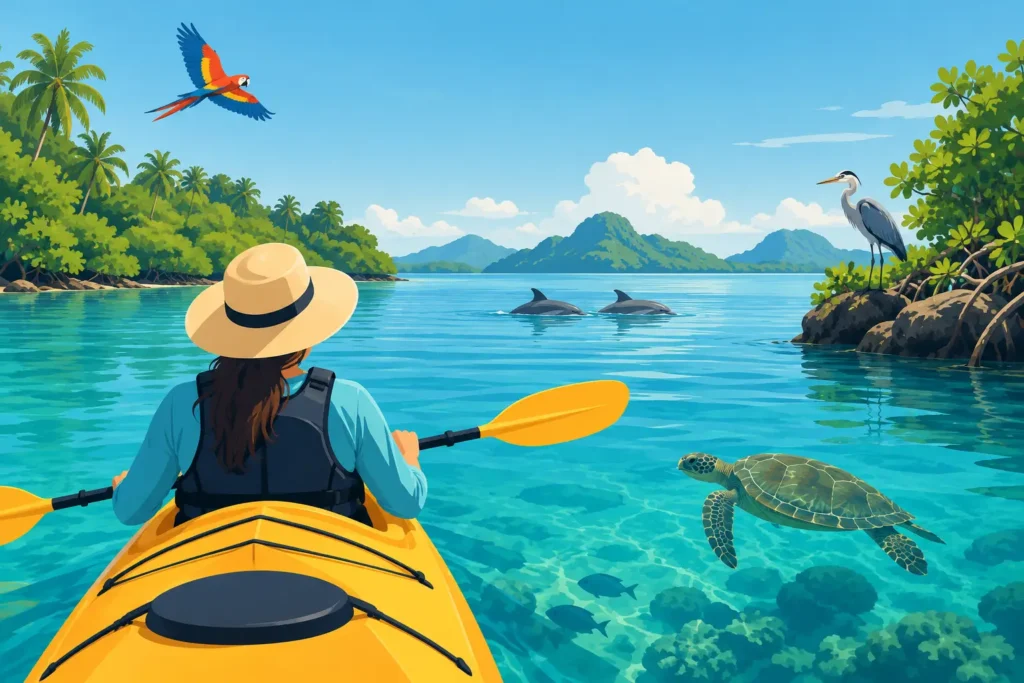
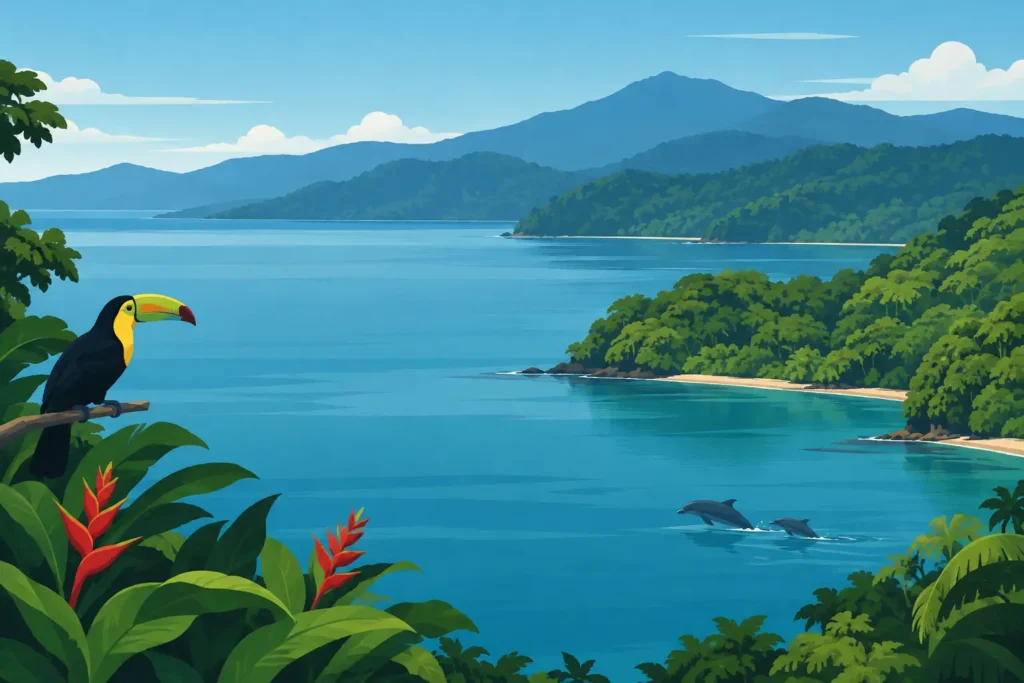
A scarlet macaw crosses a quiet gulf overhead. A dolphin breaks the glassy surface beside your bow. Somewhere beyond the mangroves, howler monkeys begin their morning call. The best tropical wildlife encounters do not happen on a rigid schedule, but traveling by sea kayak gives you an unusually good chance of being present when they do.
A kayak moves quietly, reaches shallow coves and forest-lined channels, and keeps the pace human. In Costa Rica and Panama, that changes wildlife viewing from a quick stop between bigger activities into the center of the expedition. The reward is not simply checking species off a list. It is watching an animal behave naturally in the place that supports it.
Why Kayaking Creates the Best Tropical Wildlife Encounters
Wildlife is often most active when motorboats are absent or moving slowly: early morning, late afternoon, and the cooler hours around changing weather. A sea kayak is well suited to these windows. You can paddle out from an ecolodge before breakfast, drift near a mangrove edge in silence, or linger offshore after a snorkeling stop without the noise and wake of a larger vessel.
That quiet access matters. Tropical shorelines are layered habitats, not one continuous beach. Mangrove estuaries shelter juvenile fish, crabs, birds, and reptiles. Rocky points and offshore islands draw seabirds and marine life. Rainforest-covered shores connect the sea directly to the canopy, where monkeys, macaws, toucans, and sloths may appear.
Still, a kayak is not magic. Dense rainforest can hide even abundant wildlife, rain can change visibility, and wild animals do not perform on demand. The strongest trips treat sightings as a possibility earned through time in the right habitat, skilled guiding, and patient observation – not as a guarantee.
Costa Rica’s Standout Wildlife Paddling Regions
Golfo Dulce: Dolphins, Rainforest, and Remote Shorelines
On Costa Rica’s southern Pacific coast, Golfo Dulce is a deep tropical gulf framed by some of the country’s most intact lowland rainforest. Its protected waters make it a compelling setting for a multi-day lodge-to-lodge sea kayaking expedition, particularly for travelers who want active days without open-ocean exposure every hour of the trip.
Bottlenose dolphins are frequently seen here, sometimes moving through the gulf in small groups while kayakers pause at a respectful distance. Sea turtles may surface briefly along the route, and rays occasionally glide beneath clear water. Above the shoreline, look for scarlet macaws, brown pelicans, frigatebirds, and kingfishers. Monkeys and sloths can be spotted from the water, though a close view depends on where they are feeding and how quietly the group approaches.
The larger appeal of Golfo Dulce is the setting. You may spend a morning paddling beneath forested slopes, stop to snorkel over a rocky reef, then arrive at a remote lodge where the soundtrack is cicadas, surf, and birds rather than traffic. It is a full immersion experience, not a wildlife drive with a paddle attached.
Tortuguero: A Living Network of Jungle Canals
Tortuguero on Costa Rica’s Caribbean coast offers a different kind of encounter. Here, the water is a network of canals, rivers, lagoons, and flooded forest. The landscape feels close and enclosed. You are not scanning a wide gulf for a distant splash. You are looking into the trees, along muddy banks, and across still water where each movement deserves a second look.
This is prime territory for birders and anyone fascinated by rainforest ecology. Herons, egrets, kingfishers, anhingas, and colorful smaller birds patrol the waterways. Three-toed sloths may hang motionless in the canopy. Capuchin monkeys, howler monkeys, basilisk lizards, caimans, and river turtles are all part of the experience.
Sea turtle nesting is what makes Tortuguero famous, but timing is critical. Nesting activity varies by species and season, and ethical observation requires strict local protocols. A responsible guide will never promise a nesting turtle encounter or crowd an animal for a photo. The privilege is seeing the natural event with minimal disturbance, if conditions and timing align.
San Blas, Panama: Reef Life and Island Culture
The San Blas archipelago in Panama combines marine wildlife with a cultural dimension that few tropical paddling destinations can match. Hundreds of low islands and reefs create a vast playground for sea kayakers, with clear-water snorkeling often woven directly into the route.
Expect to see reef fish, rays, sea stars, and corals in shallow lagoons. Sea birds work the channels, and the open-water crossings can bring surprises, from flying fish to dolphins. Conditions vary significantly between islands, so this is where professional route planning becomes essential. Wind direction, tides, exposed passages, and safe landing options all shape the day.
San Blas is also the homeland of the Guna people. The best experience respects that reality. Wildlife observation and island travel should never treat local communities as scenery. Traveling with guides who understand regional customs, arrange visits thoughtfully, and manage logistics with care creates a more meaningful journey for everyone.
Timing Matters More Than a Species List
For many travelers, the first question is, “When will I see the most wildlife?” The honest answer is that it depends on what matters most to you.
Dry-season travel can bring easier logistics, sunnier paddling days, and clearer conditions for snorkeling in some regions. Green-season travel often means fuller rivers, lush forest, dramatic skies, and fewer visitors, but also more rain and the possibility of itinerary adjustments. On the Caribbean coast, weather patterns do not mirror Costa Rica’s Pacific side exactly, so one nationwide rule does not apply.
Daily timing is equally important. Dawn is often the richest period for birds and monkey activity. Late afternoon can be excellent for paddling as heat fades and light softens. Midday is often best reserved for swimming, snorkeling, a shaded hike, or rest at the lodge – although marine mammals can appear at any time.
Choose a trip based on habitat, not only a headline species. Travelers seeking jungle canals and birdlife should lean toward Tortuguero. Those who want a balance of rainforest coast, dolphins, snorkeling, and comfortable expedition pacing may prefer Golfo Dulce. For reef snorkeling and remote-island culture, San Blas brings a different kind of tropical adventure.
How to Watch Wildlife Without Changing Its Behavior
The best encounter leaves the animal doing exactly what it was doing before you arrived. That standard sounds simple, but it requires discipline, especially when a rare sighting brings excitement to the group.
Keep a generous distance. If dolphins change direction repeatedly, birds flush from a shoreline, or a monkey starts alarm calling, you are too close. Do not paddle directly at wildlife, surround it, feed it, play calls or music, or use a drone near sensitive habitats. A long lens or binoculars is more valuable than trying to close every gap.
Your guide’s judgment is part of the trip’s value. Experienced local guides read changing wind, tides, cloud cover, animal behavior, and group ability at the same time. They know when to hold position, when to move on, and when conditions call for a route change. On a well-run expedition, safety and low-impact travel are not separate from wildlife viewing. They are what make sustained access to wild places possible.
What to Bring for Better Encounters
You do not need to haul a professional camera kit to come home with strong memories. Bring compact binoculars if birds are a priority, a dry bag for electronics, polarized sunglasses to reduce glare on the water, and a waterproof camera or phone case that can be used quickly. The moment a dolphin surfaces is not the time to unpack gear from the bottom of a hatch.
Wear lightweight sun protection that covers more skin than sunscreen alone, and pack a rain layer even during a favorable weather window. For photography, prioritize stability and readiness over perfection. A sharp image of a macaw in flight is a bonus. Watching it cross a rainforest bay with your paddle resting silently across the cockpit is the encounter.
Choose an Expedition, Not a Wildlife Promise
A premium guided trip should make the wild feel accessible without making it feel managed. That means quality kayaks and safety systems, small groups, guides trained to make sound decisions, and an itinerary with enough time to let a place reveal itself. It also means accepting that weather, tides, and wildlife will shape the experience.
Sea Kayaking Costa Rica builds its expeditions around that reality: active travel with the planning, local knowledge, and support required for remote tropical coastlines. You do not need to be an expert paddler to enjoy these places, but you do need a willingness to participate, listen to your guides, and stay curious when the day changes course.
The animal you remember most may not be the one you expected. It could be a turtle surfacing once in a silent channel, a line of pelicans skimming a wave, or a monkey watching your group from the canopy. Leave space in the itinerary – and in your attention – for that moment.