Tortuguero Kayaking Wildlife Tour Guide
July 6, 2026
Small Group Adventure Tours Costa Rica
July 8, 2026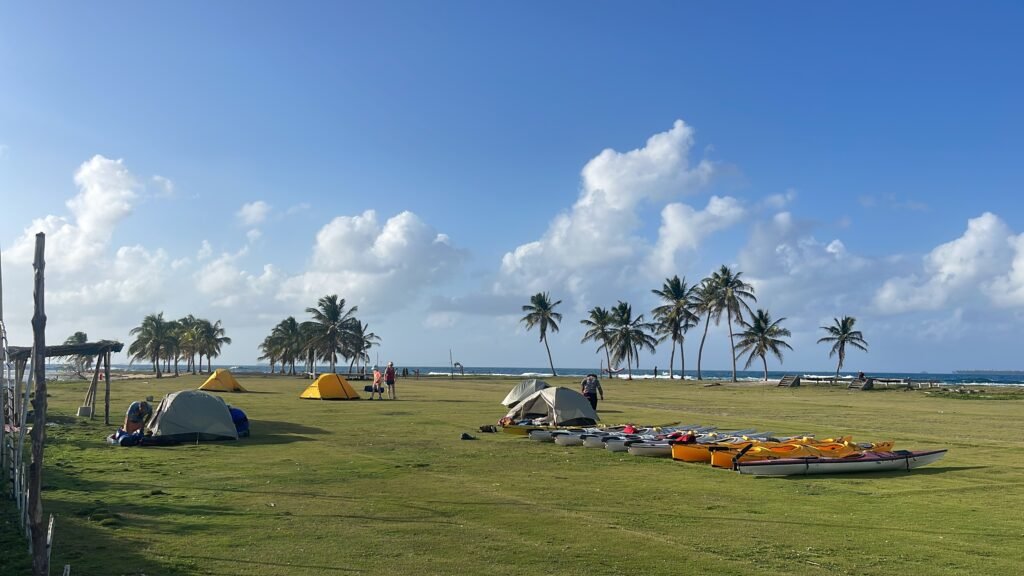
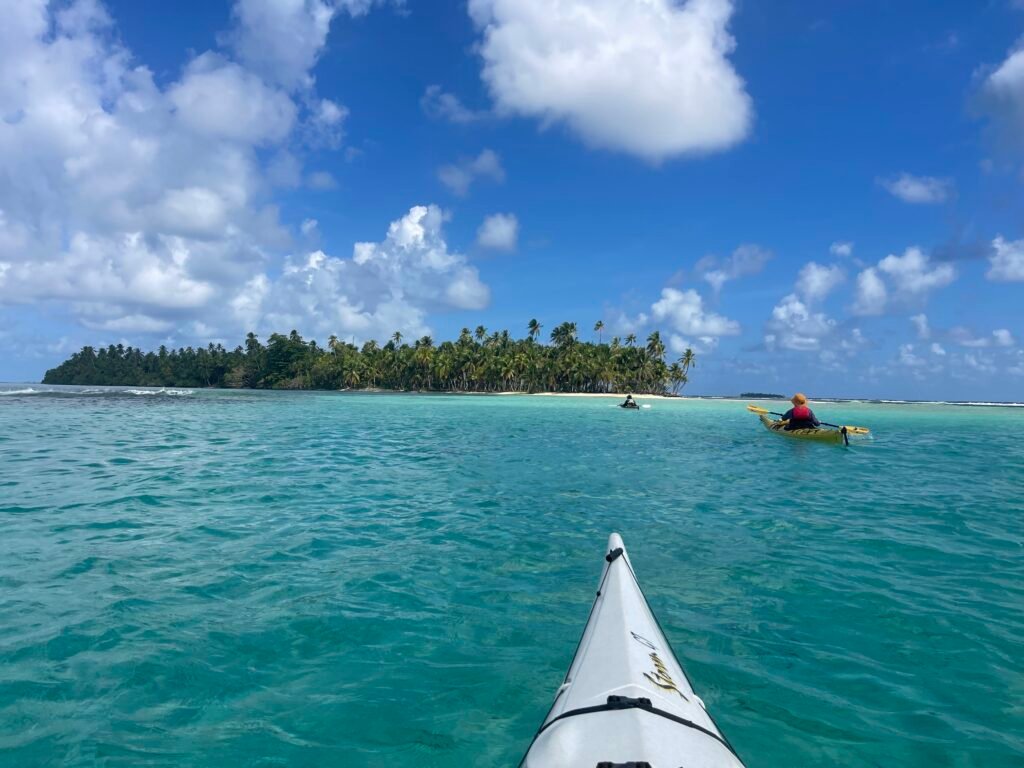
The first surprise on a san blas kayaking expedition is how quickly the modern world drops away. One boat ride from the mainland, the traffic, schedules, and noise give way to a horizon scattered with low palm islands, clear water over coral, and the steady rhythm of paddles moving from cay to cay. It feels remote because it is remote, and that is exactly why the trip works so well for travelers who want more than a standard beach vacation.
San Blas, on Panama’s Caribbean coast, is not a place that rewards rushed travel. It rewards travelers who want to move at water level, notice shifting light on the reef, stop to snorkel in calm shallows, and spend time in a living indigenous territory rather than simply pass through it. A guided kayaking expedition here is not just about covering distance. It is about accessing a place that makes the journey itself the main event.
Why a San Blas kayaking expedition stands out
There are plenty of tropical paddling destinations, but San Blas has a rare combination of assets. The island chains offer generally protected routes, the scenery changes constantly, and the cultural setting is as compelling as the marine environment. You are not paddling past generic resort coastline. You are traveling through Guna Yala, an autonomous indigenous region where local communities maintain strong traditions and deep ties to the sea.
That changes the feel of the trip in a meaningful way. The best expeditions are not built as fitness tests with a tropical backdrop. They are carefully paced journeys that combine paddling, snorkeling, island camps or simple accommodations, and respectful cultural encounters. For active travelers, that balance matters. You want challenge, but you also want context.
There is also a practical advantage to this destination. The waters between many of the islands can be ideal for sea kayaking, especially when a route is planned by guides who understand local winds, tides, crossings, and landing conditions. Conditions still vary, and some days are more demanding than others, but the area lends itself well to multi-day exploration by kayak.
What the route typically feels like
A San Blas trip is usually less about one long push and more about a string of rewarding travel days. You wake near the water, pack your dry bags, launch from a beach or island edge, and paddle toward the next cluster of cays. Some crossings are short and relaxed. Others require more focus, especially if the breeze builds or open water stretches a bit farther between landings.
That variation is part of the appeal. A good expedition has rhythm. Mornings often bring the best paddling conditions, with calmer seas and cooler temperatures. Midday might include a swim, a snorkeling stop, lunch in the shade, or time in a Guna community. Afternoons can be shorter and more relaxed, depending on the route and weather.
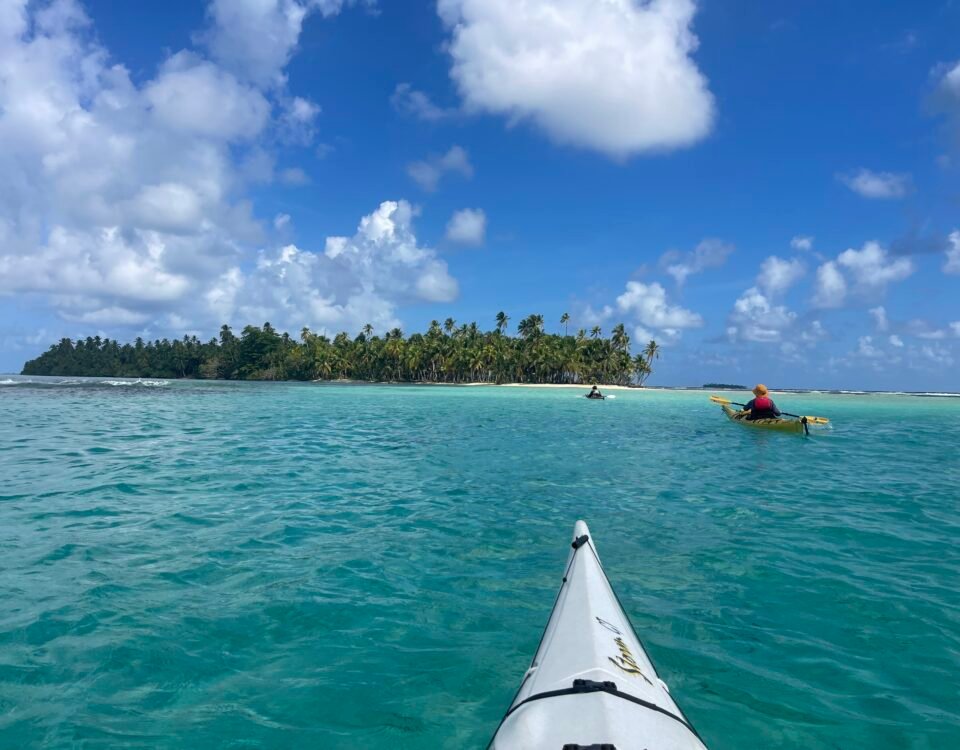
The visual experience is constant. You move through shallow turquoise water one hour and deeper blue channels the next. Coral heads appear below the kayak. Small islands rise ahead, ringed with white sand and palms. In the distance, squalls may drift over the open Caribbean while your own stretch of water remains calm and bright. It is a place that rewards slow, human-powered travel.
Skill level, pace, and who this trip suits
One of the most common questions about a san blas kayaking expedition is whether it is only for highly experienced paddlers. Usually, no. Many well-designed guided trips are accessible to fit beginners or intermediate kayakers, provided they arrive with a good attitude, basic fitness, and an interest in active travel.
That said, this is still an expedition. You should expect multiple paddling days, tropical heat, saltwater exposure, and the occasional weather shift that changes the feel of a crossing. If you are looking for a resort stay with a little kayaking on the side, this is probably not the right match. If you want a structured adventure with professional support, immersive scenery, and real movement through a remote region, it is an excellent fit.
The sweet spot tends to be travelers who like being active but do not want to manage all the logistics themselves. Couples, solo travelers, and small groups often do especially well on trips like this. They get the satisfaction of earning the experience while still benefiting from route planning, safety systems, local coordination, and quality expedition gear.
The cultural side of the expedition
The Guna connection is one of the strongest reasons to choose San Blas over another tropical paddling destination. This is not cultural programming added after the route is built. The culture is part of the place itself. Local communities shape access, daily life, and the overall character of the journey.
Handled well, that adds depth without turning the trip into a spectacle. You may visit villages, see traditional craftwork, learn more about how communities live across the islands, and understand the region beyond the postcard image. Respect matters here. Travelers who arrive curious, flexible, and willing to listen tend to get the most from the experience.
This is also where guided travel has a clear advantage. In a destination with cultural protocols, transportation complexity, and limited infrastructure, local knowledge is not a luxury. It is the difference between a trip that feels disjointed and one that feels smooth, respectful, and well grounded.
Logistics matter more here than most travelers expect
San Blas looks simple on a map – islands, water, beaches. In reality, it is a place where logistics can make or break the experience. Access involves coordinated ground and boat transfers, weather awareness, equipment handling, and local permissions. Once you are in the islands, there are fewer backup options than in more developed coastal destinations.
That is why experienced outfitters matter. On a premium guided expedition, the work happening behind the scenes is substantial. Boats, kayaks, dry storage, meals, safety communication, route adjustments, and local relationships all need to be managed carefully. When that is done well, guests mostly notice the benefit rather than the complexity.
For many travelers, this is the tipping point in favor of a guided trip. San Blas rewards independence in spirit, not necessarily in execution. You still get the feeling of discovery, but without the burden of solving every transport and safety question on your own. Companies such as Sea Kayaking Costa Rica build these trips for exactly that kind of traveler – people who want serious adventure paired with professional support.
What to pack and what to expect physically
Packing for San Blas is more about function than volume. You need lightweight paddling clothing, reliable sun protection, dry storage, reef-safe essentials, and the ability to stay comfortable in heat, humidity, and salt. Fancy extras usually stay unused. The best gear is the gear that dries quickly and works hard.
Physically, expect long days outdoors rather than nonstop exertion. Sun exposure is often the bigger factor than mileage. A traveler who regularly hikes, bikes, works out, or stays generally active will usually adapt well, especially with a guided pace and proper rest stops. Previous kayaking experience helps, but mindset counts just as much. Flexibility, patience, and willingness to be outside all day are often better predictors of success.
Food and accommodations depend on the itinerary style. Some trips lean more expeditionary, with simpler camps and a stronger remote-travel feel. Others blend paddling with basic island lodgings or ecolodge-style stays. Neither approach is automatically better. It depends on whether you want maximum comfort or a stronger sense of being out there.
Is a San Blas kayaking expedition worth it?
If your idea of a great trip is checked by comfort alone, probably not. San Blas asks for some effort. It runs on island time, weather windows, and the realities of a remote indigenous territory. Things can be simple. Plans can shift. That is part of the terrain.
But if you want a journey that feels earned, vivid, and hard to compare to anywhere else in the Caribbean, it is absolutely worth it. You are not staring at the coast from a tour boat. You are moving through it, landing on islands few travelers experience this way, and seeing the region at the speed it deserves.
The strongest expeditions leave you with more than good photos. They leave you with the memory of crossing bright water under your own power, sharing space respectfully in a remarkable cultural landscape, and ending each day pleasantly tired in one of the most distinctive paddling environments in Central America. If that sounds like your kind of travel, San Blas is not just a trip to consider. It is one to plan well and do right.